Jingdezhen ‘Porcelain Capital of the World’: Ceramic Residency
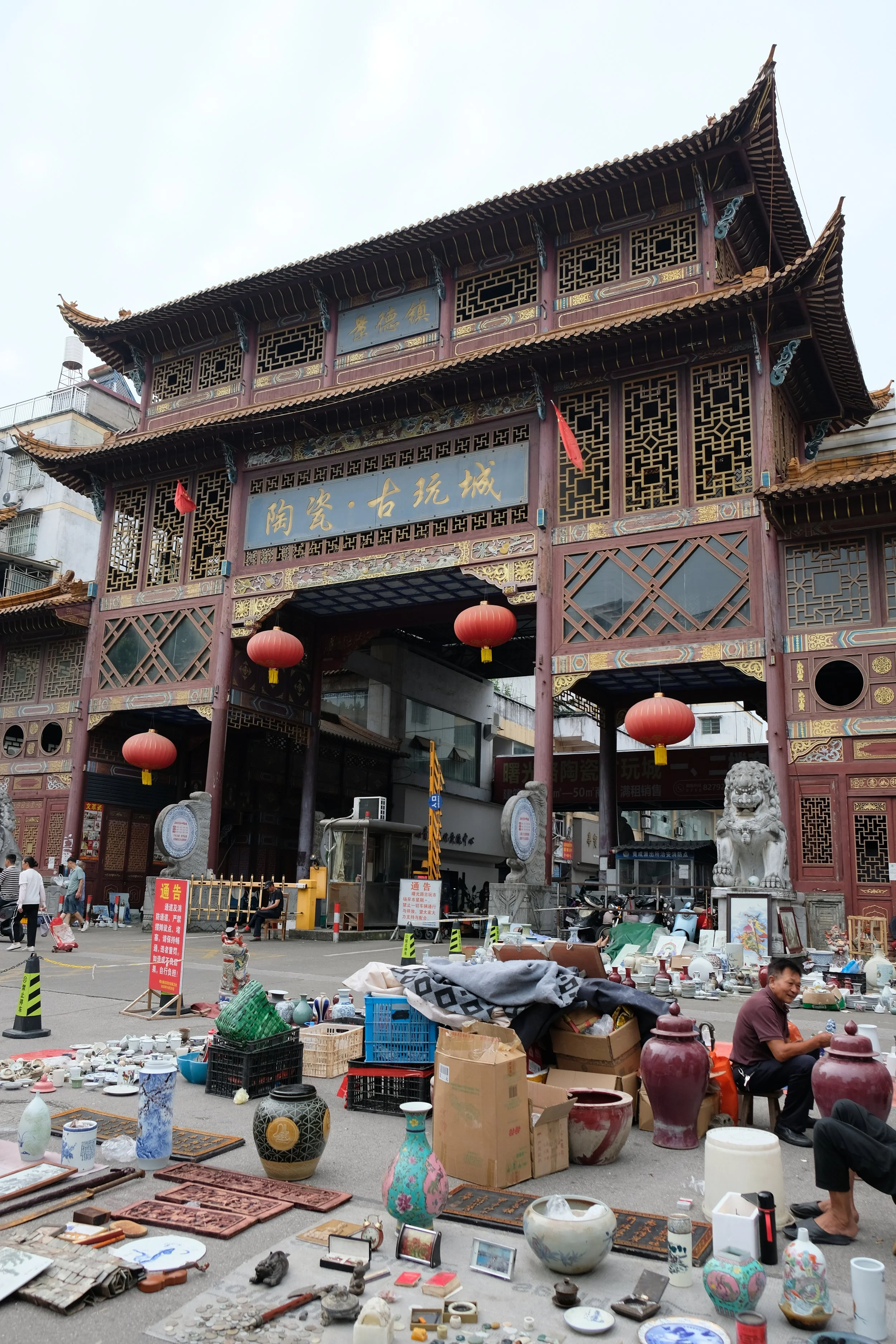
In Jingdezhen, ceramics are difficult to escape.
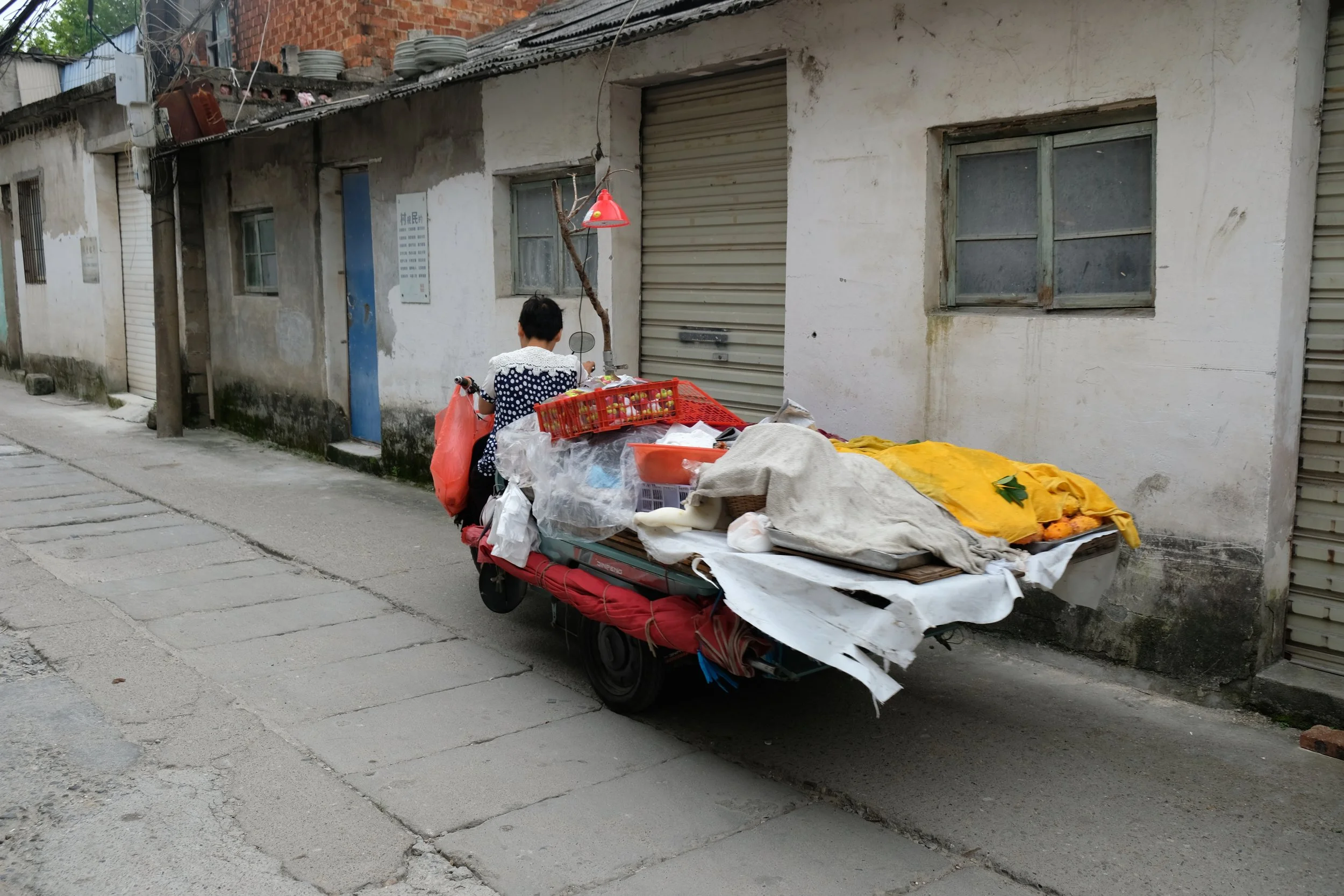
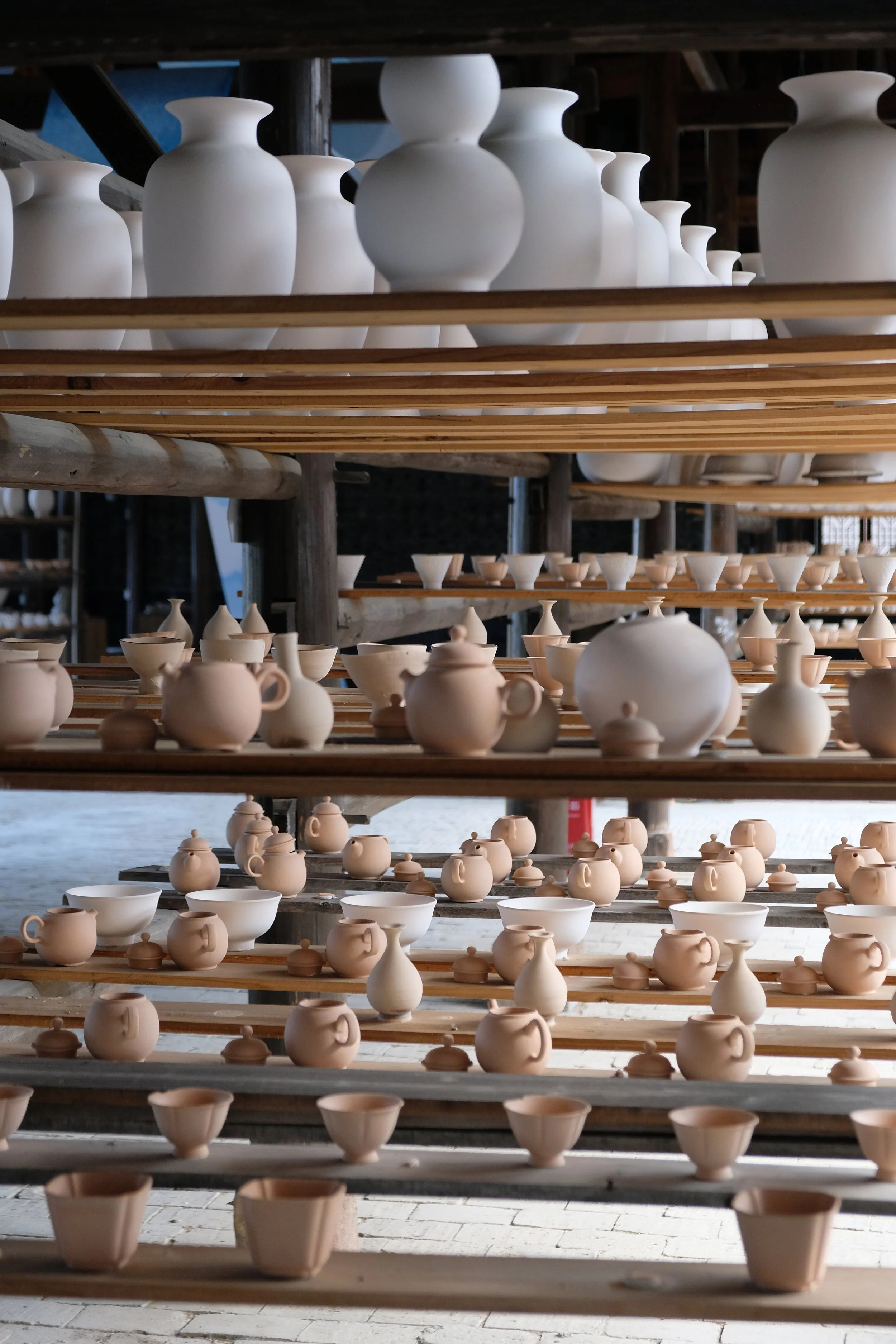
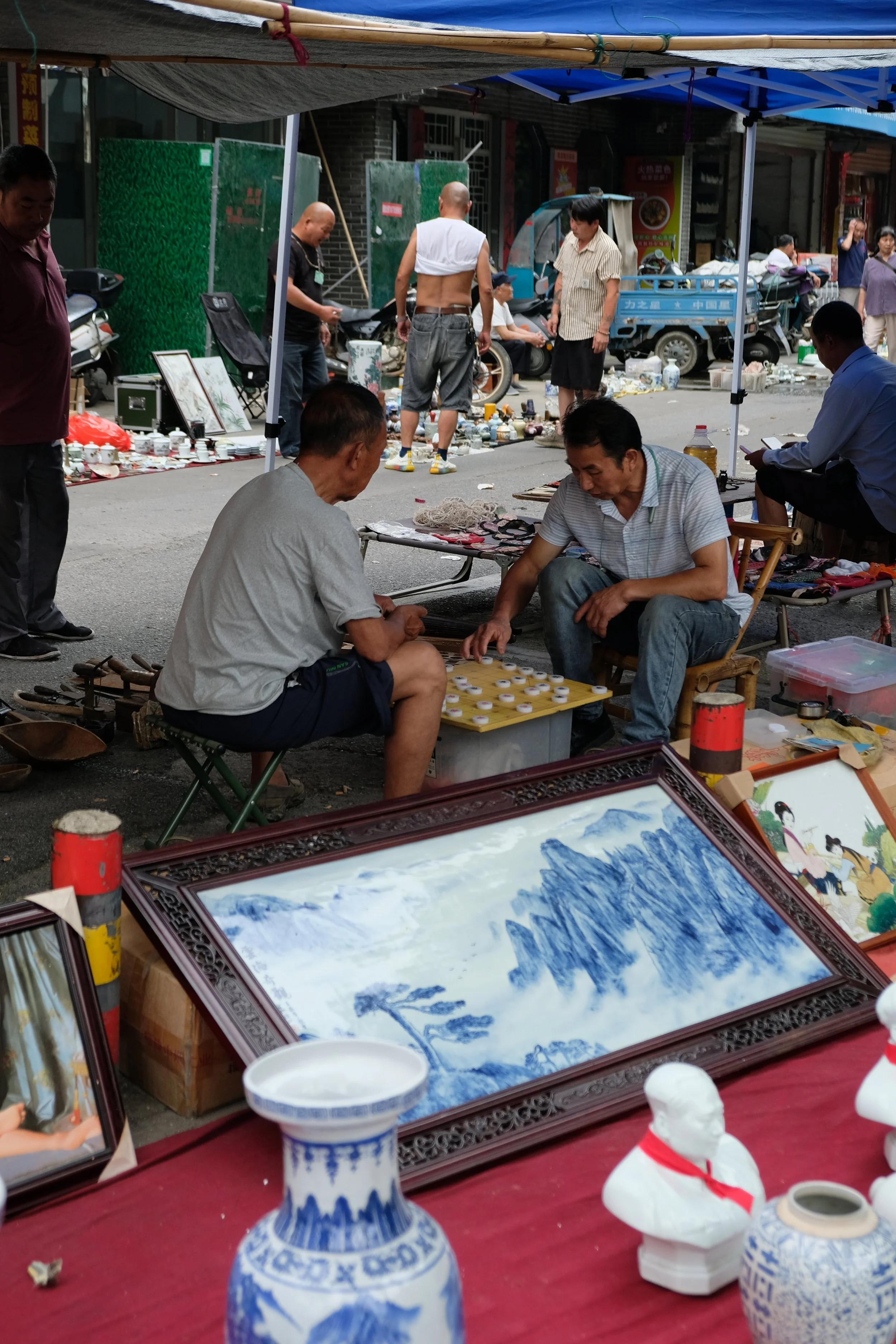
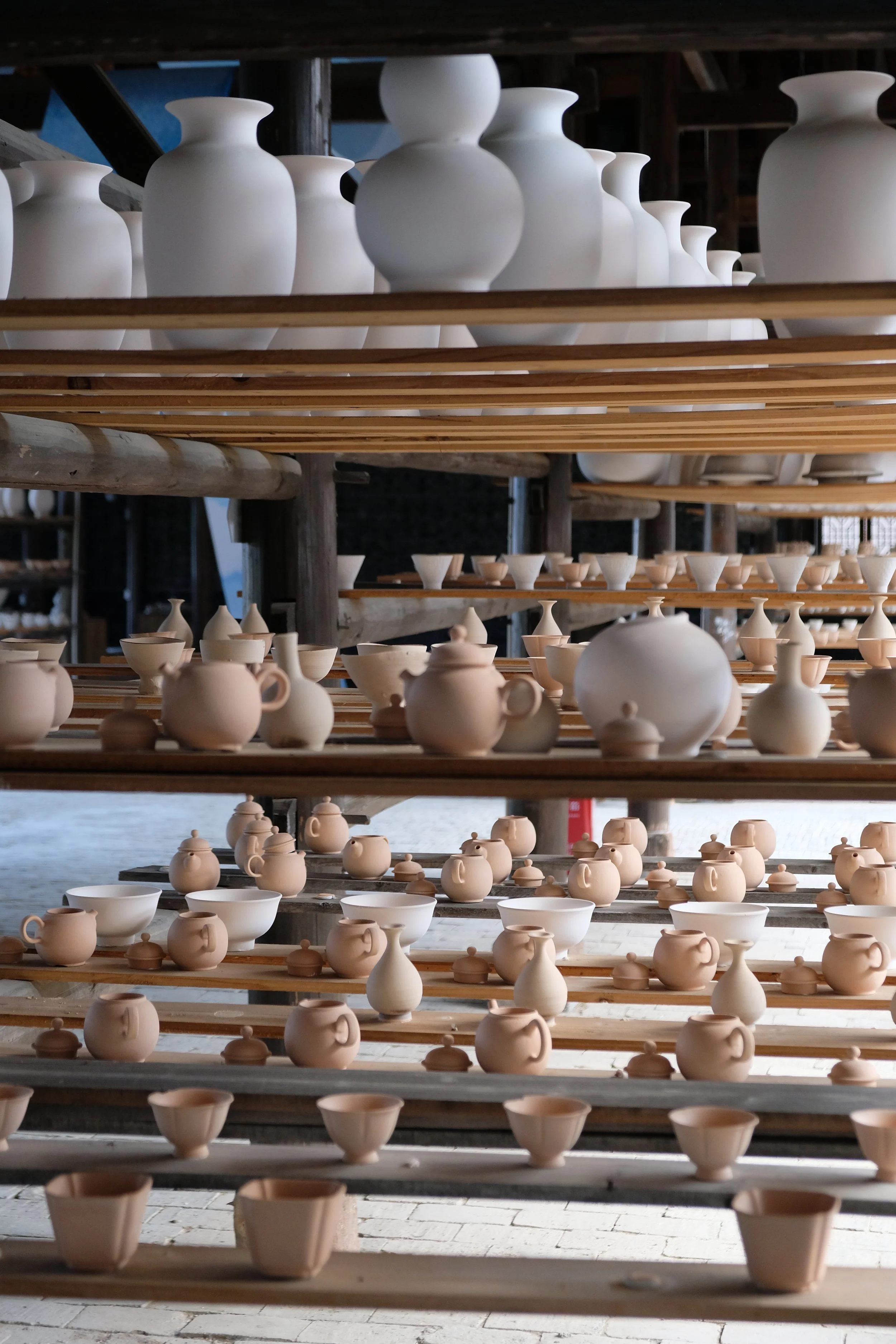
They appear on the streets, in shops, in workshops and in the hands of the people who have been making them for generations. Vases sit on roundabouts, porcelain tubes become streetlights, and it is not unusual to see a moped carrying an alarming number of enormous ceramic pots down the road.
For a month, this was my world.
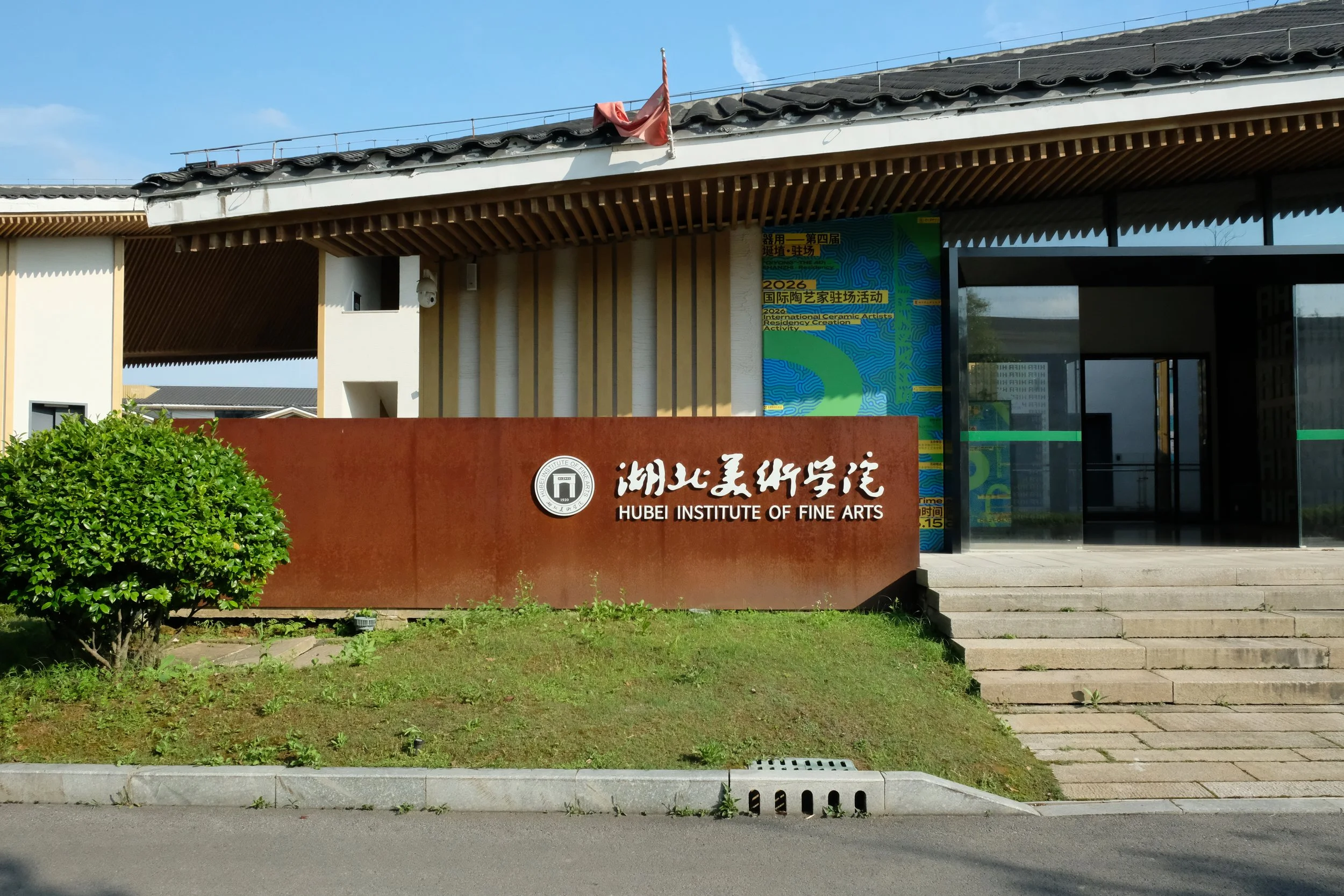
I had travelled to China for the fourth installment of the Shanzhi International Ceramic Residency, run by the Hubei Institute of Fine Art. The residency brought together ceramic artists from around the world to make new work in Jingdezhen, followed by a series of forums and an exhibition bringing together artists, professors and ceramic professionals to share their practices and discuss the future of the field.
It was my first trip to China, and my first time in Asia. More than anything, I was excited to be making in Jingdezhen, the city widely regarded as the porcelain capital of the world.
First impressions
I flew from London to Beijing and then on to Jingdezhen. Stepping off the plane, I was immediately enveloped by the heavy, humid air. I had barely arrived before my very kind chaperone, Rui, whisked me off to a residency dinner.
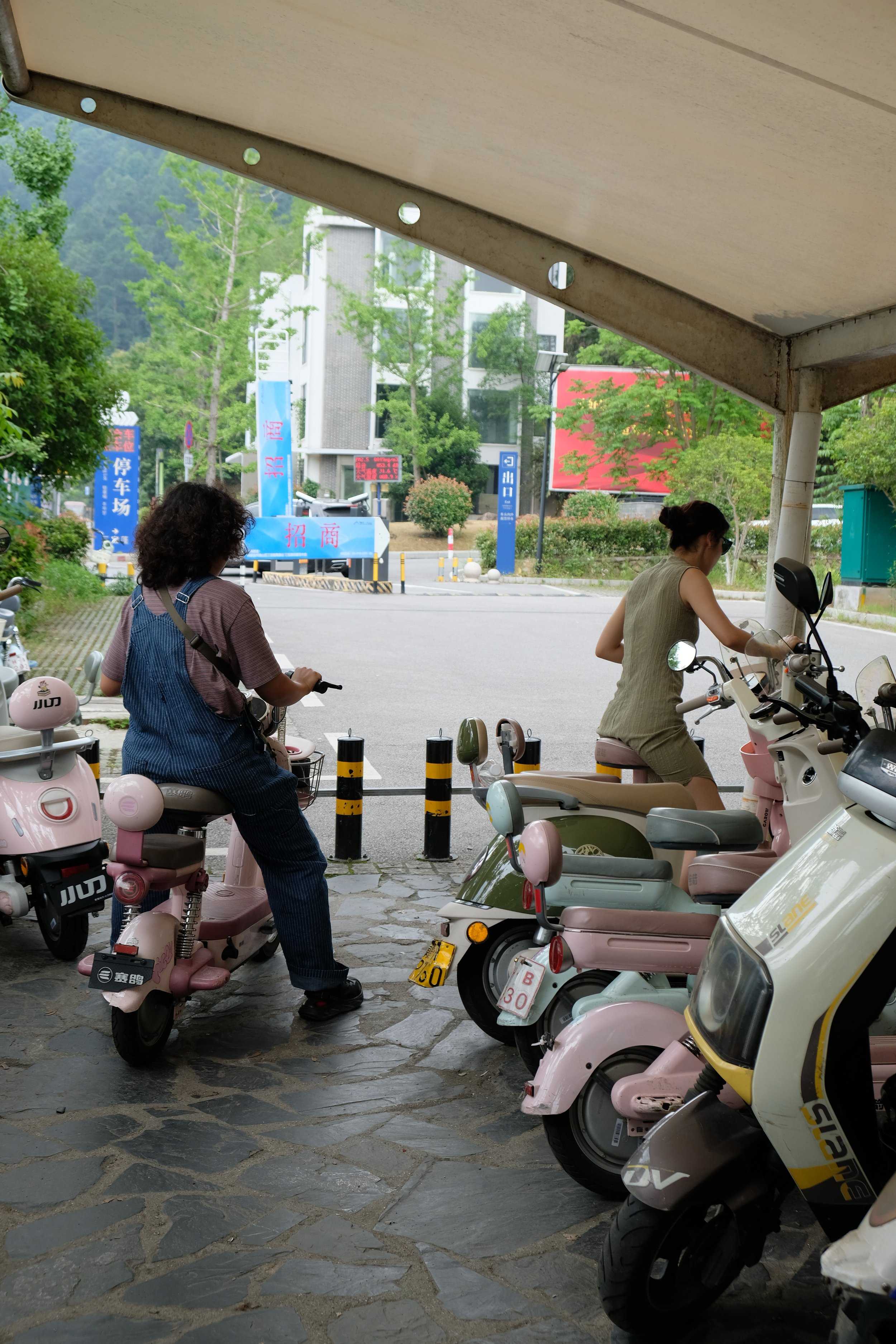
Looking out of the car window, I watched electric cars squeeze past each other alongside a constant stream of mopeds in the darkness of night. Then we arrived at the restaurant, which felt a little like stepping into an aquarium. I made my way past tanks filled with fish and sea creatures before being shown into a private room, where a huge rotating table was already waiting for us - the biggest lazy Susan I had ever seen.
Over dinner I drank beer, tried the much-loved baijiu from thimble-sized glasses, and ate my way through a seemingly endless selection of food. Afterwards, we piled onto a mixture of mopeds and taxis and headed to the residency venue, where we would be living, making and exhibiting our work.
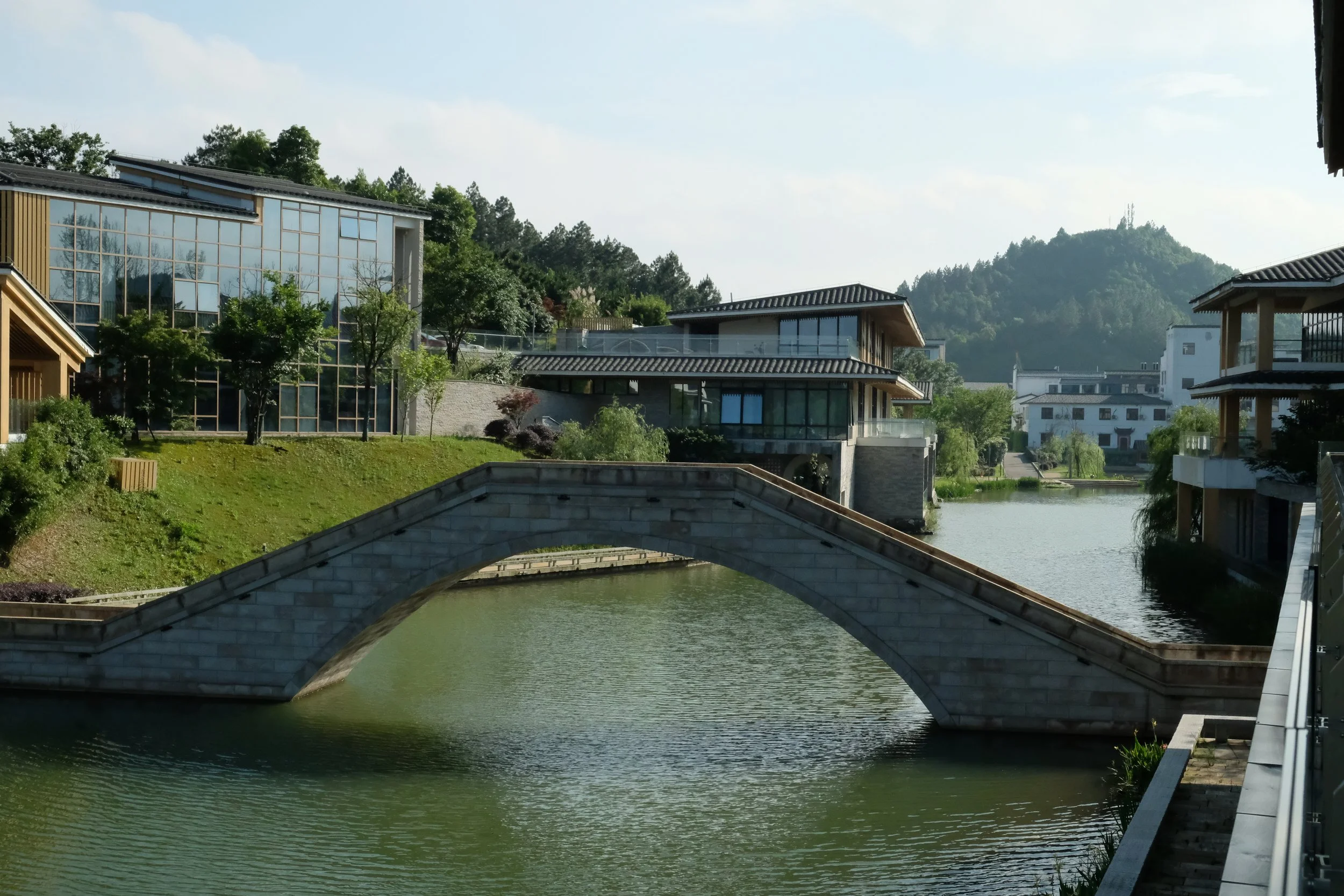
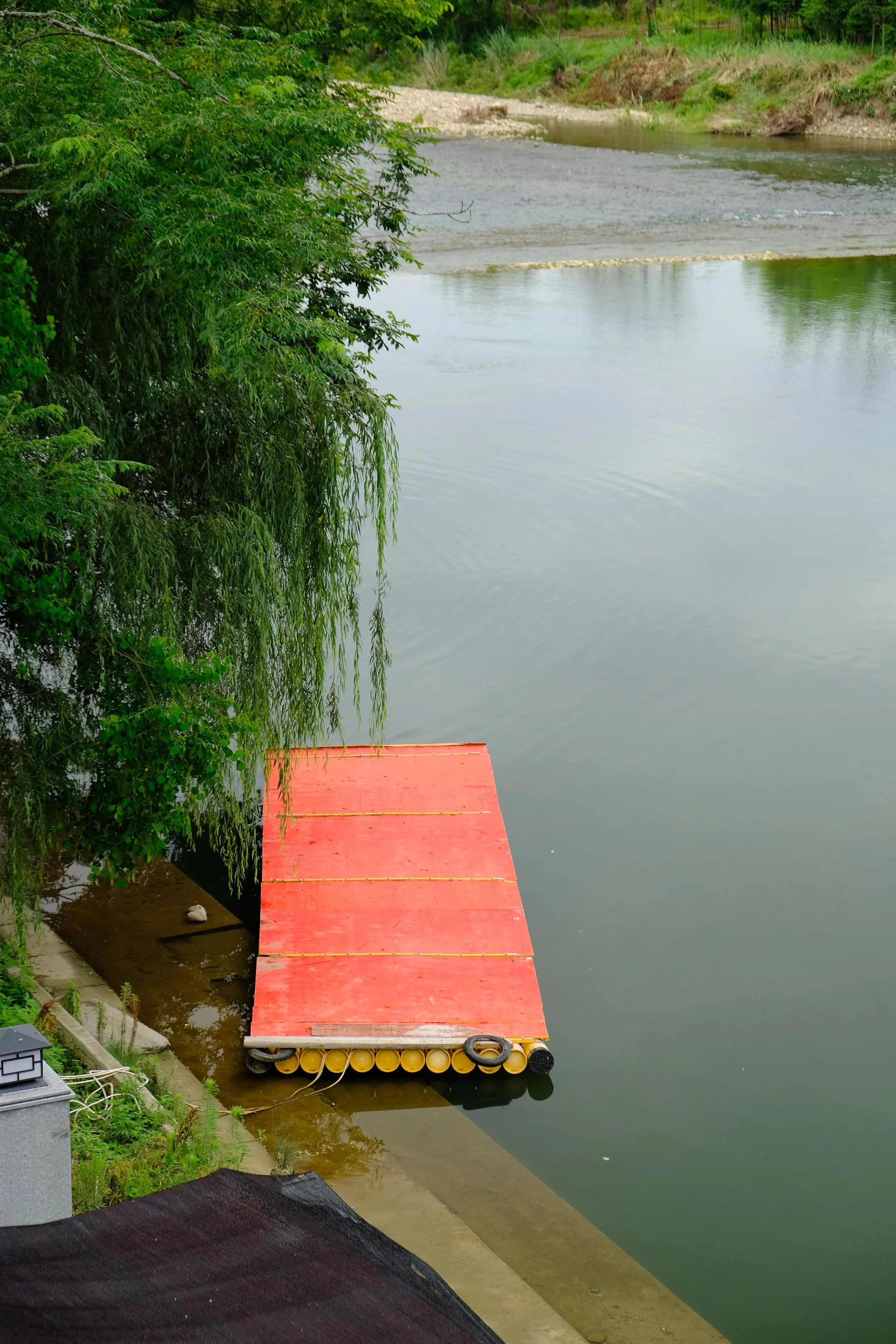
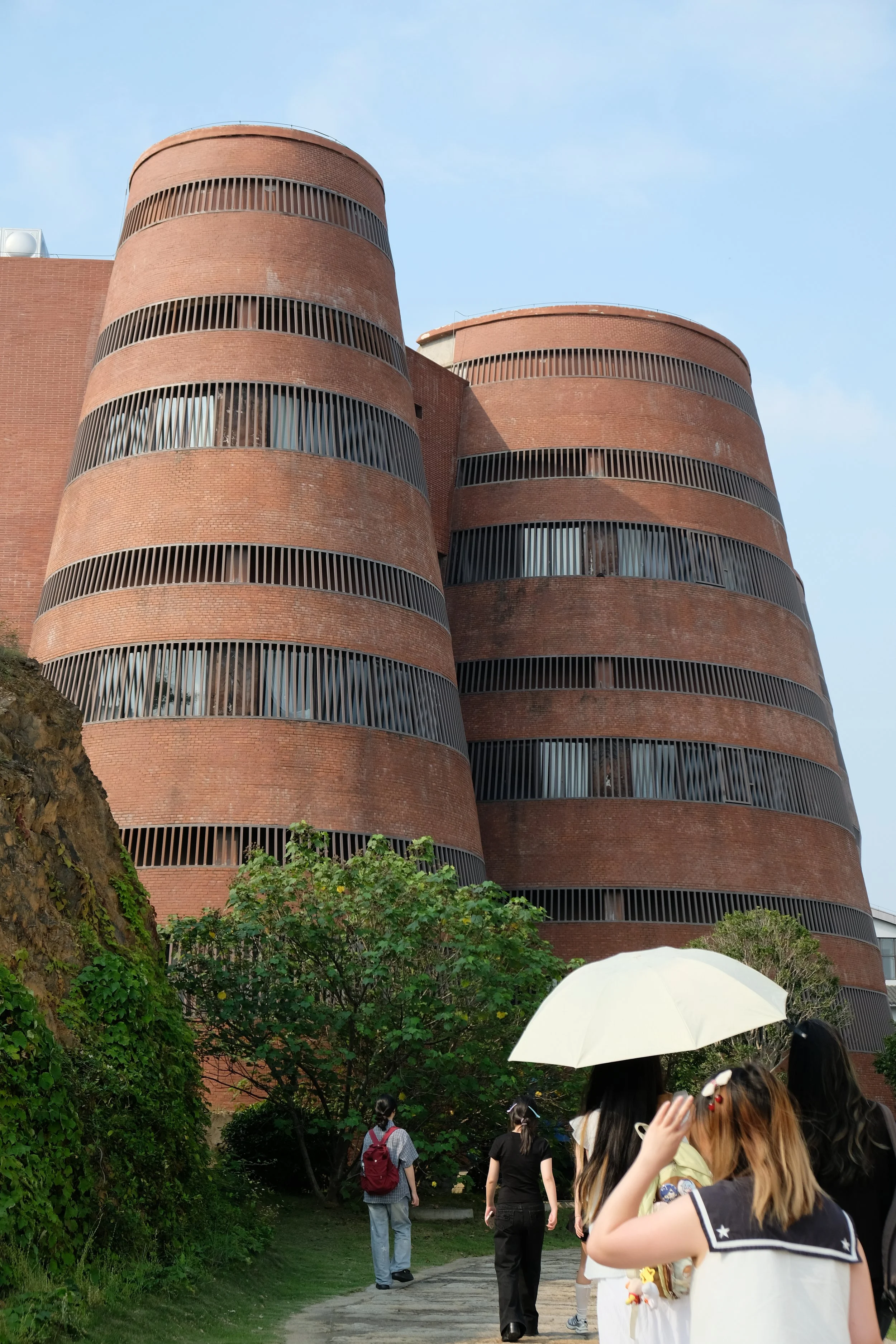
The residency was based at one of the satellite university campuses surrounding a lake on the outskirts of the city. Jingdezhen has such a long history of ceramic production that many universities across China have small campuses there, giving their ceramic students the opportunity to spend time in the city. Several of these campuses occupied the same site as ours, each in its own modernist Chinese-style building.
The whole place felt very different from home.
Many of the people I met seemed to be night owls. Staff didn't simply clock off and disappear at the end of the day; they would stay around to drink tea (and probably baijiu), smoke cigarettes, eat fruit and have what seemed like regular midnight meals. Perhaps the warmth of the climate plays a part—you can actually enjoy the evening rather than wrapping yourself up and hunkering down indoors.
I arrived just as the rainy season was beginning. The thunderstorms were sudden and intense, with huge downpours appearing almost out of nowhere. The lake also came with a large population of toads. You couldn't always see them, but you could always hear them, their croaking becoming a surprisingly comforting soundtrack to the evenings.
Discovering Jingdezhen
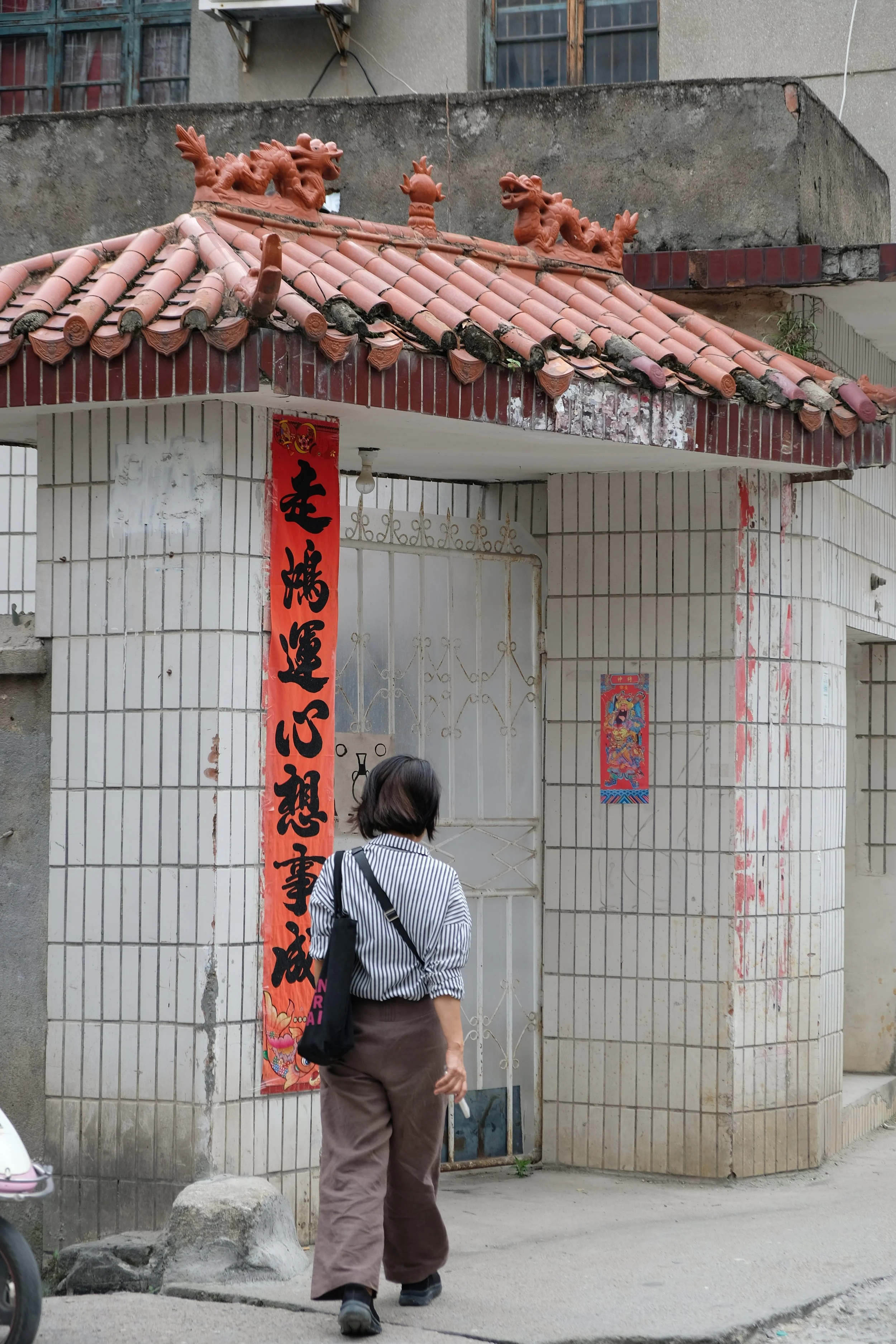
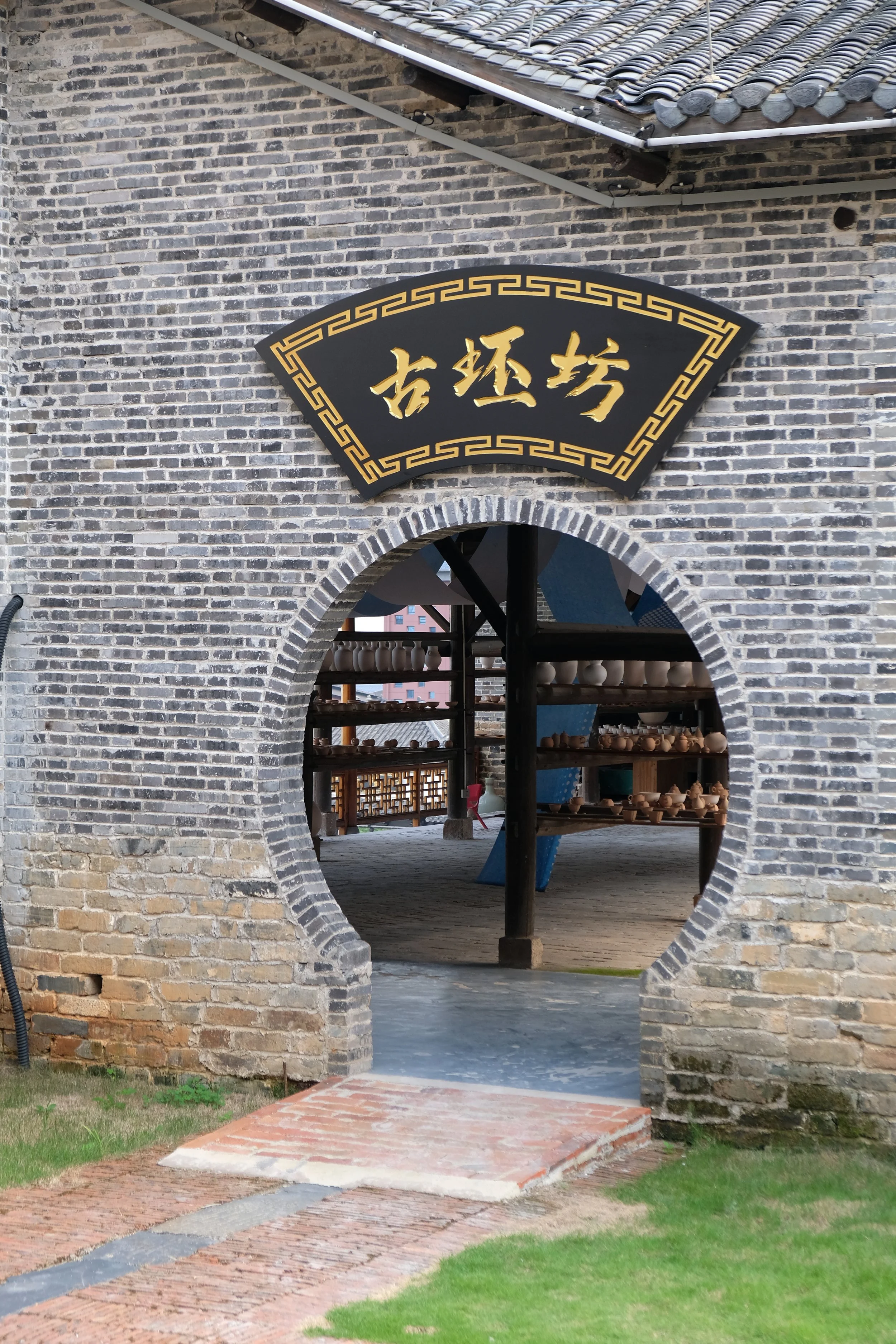
The historical importance of ceramics in Jingdezhen is impossible to miss, but it was the places away from the centre of the city that really stayed with me.
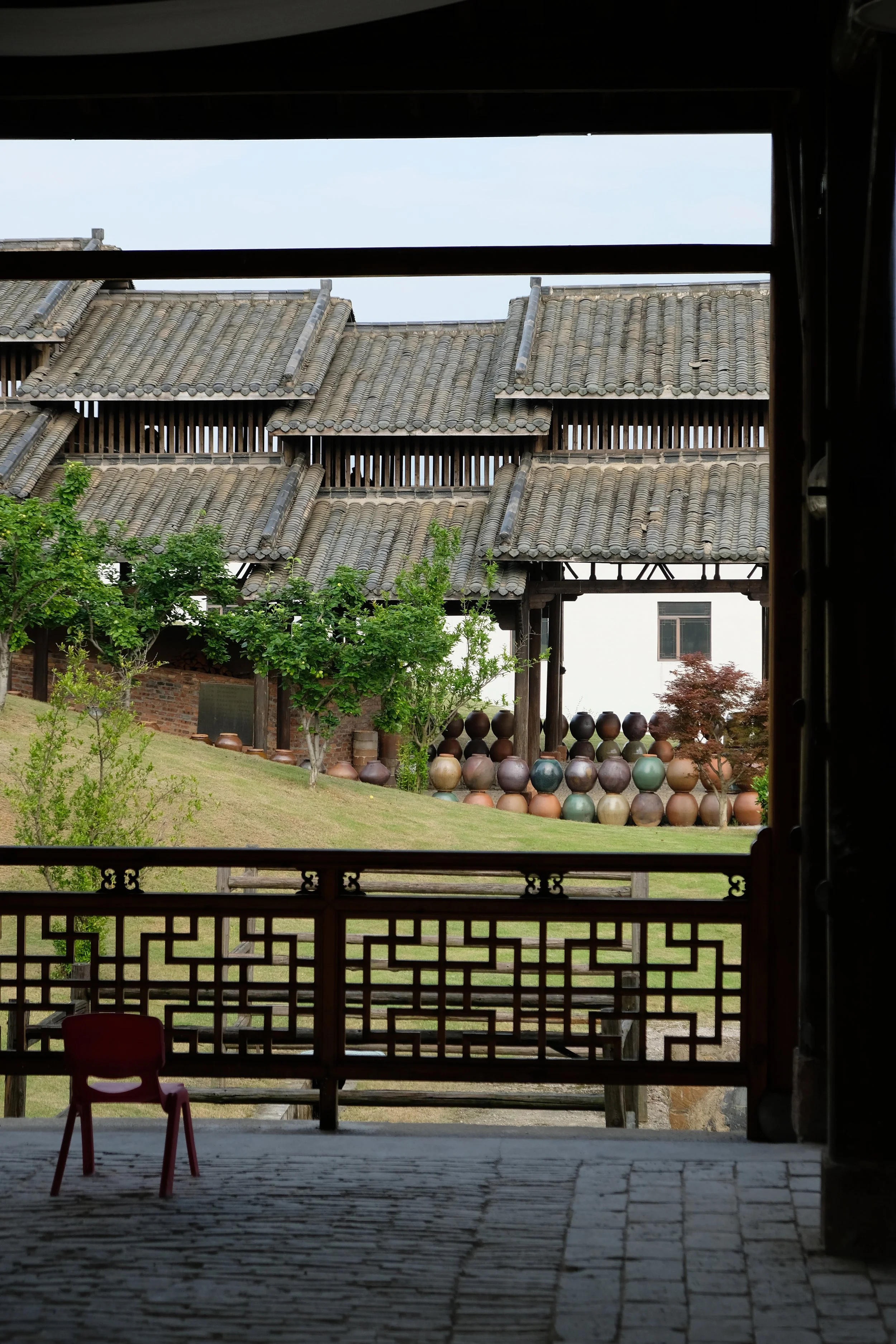
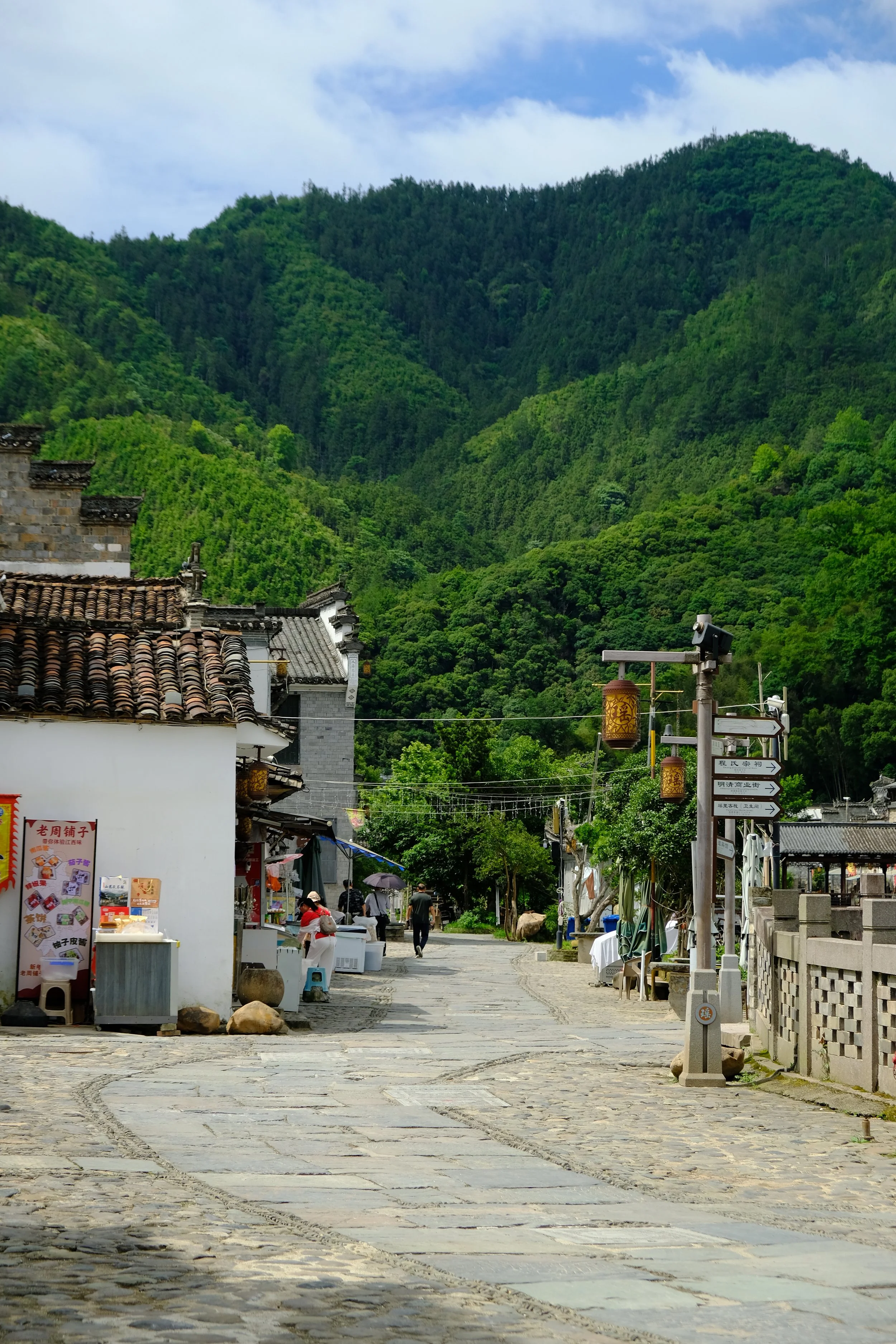
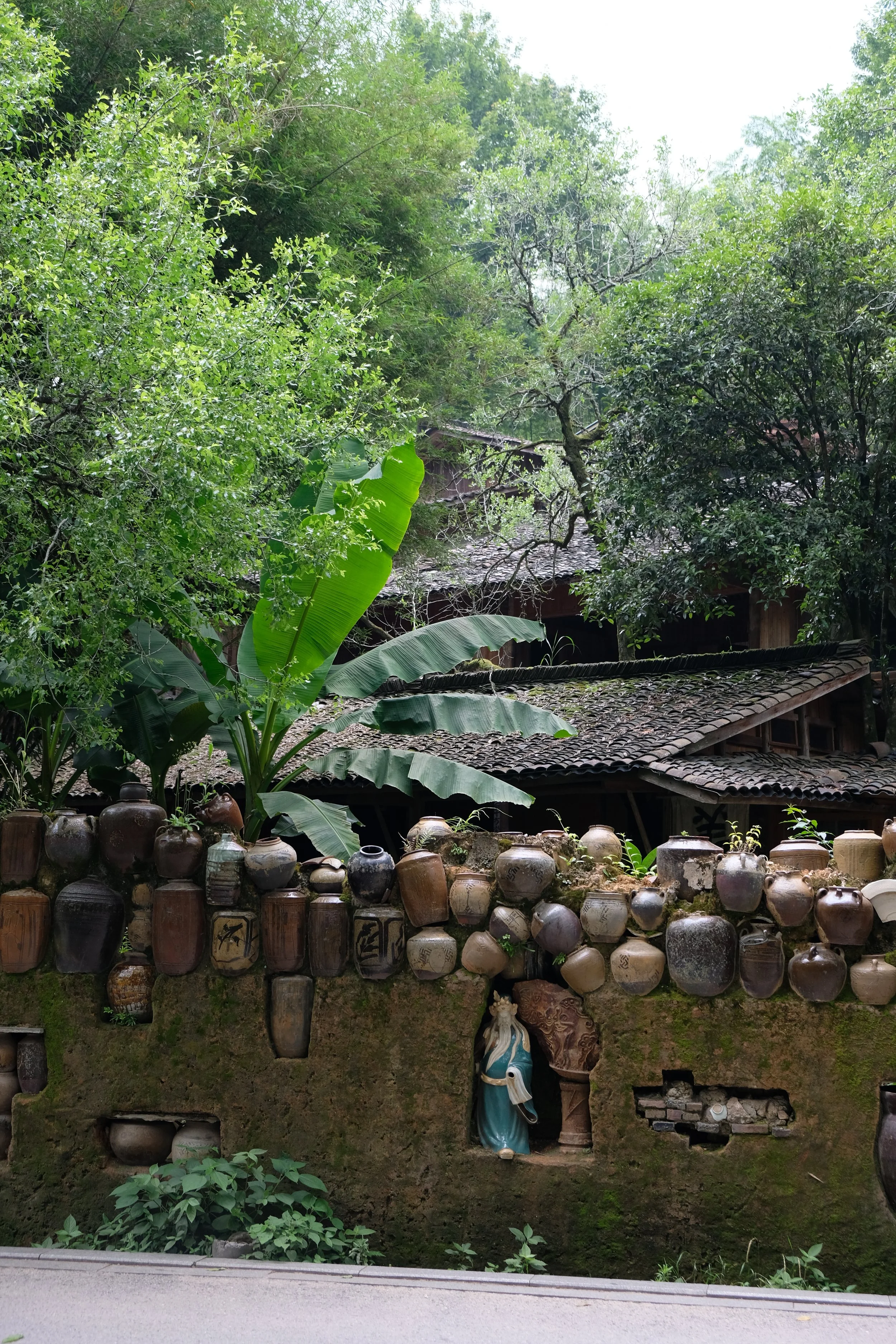
One of my favourite discoveries was Sanbao, a world-renowned pottery village just outside Jingdezhen. Surrounded by lush trees and steep hills, it felt almost hidden away, yet was absolutely crammed with pottery.
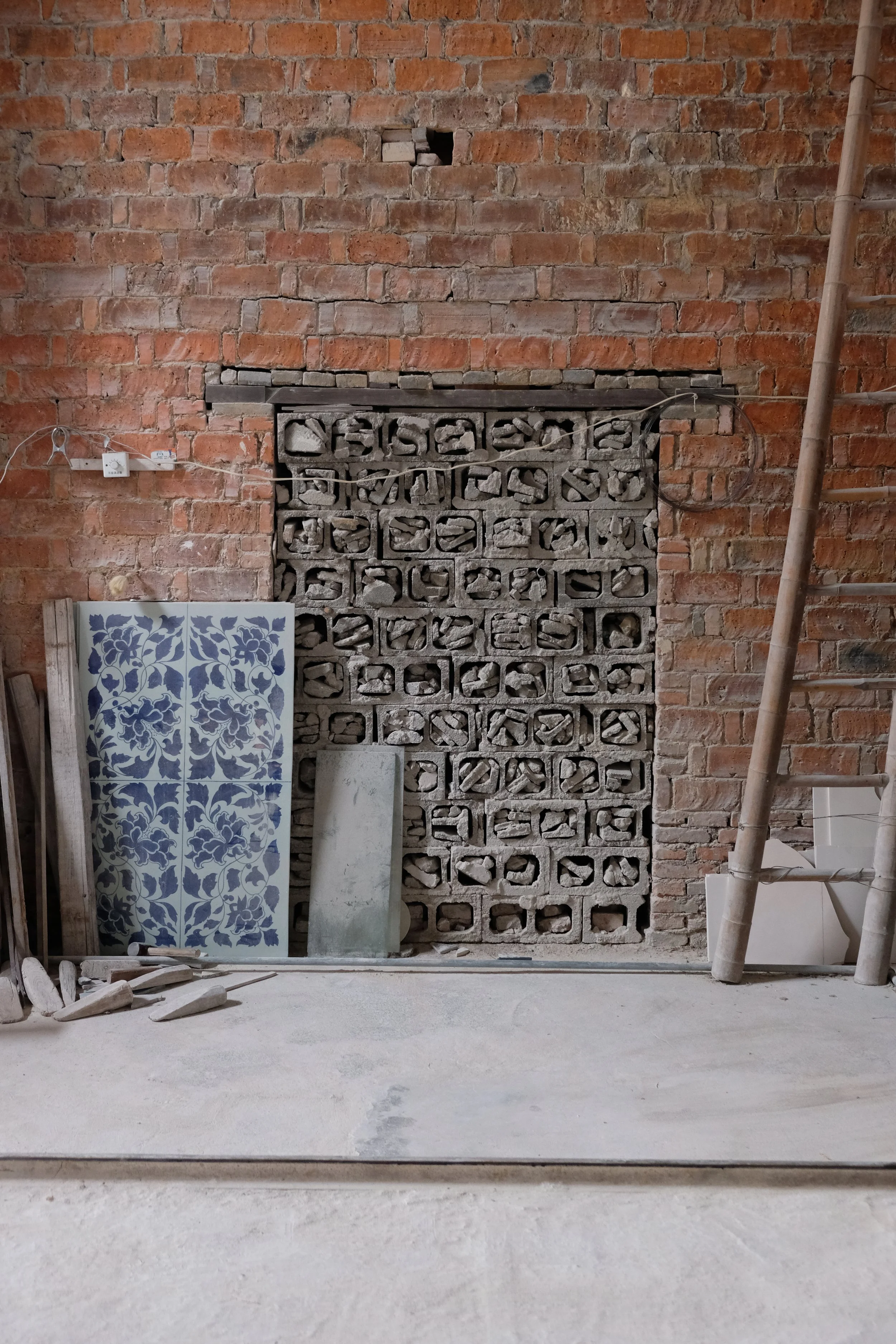
There was so much of it that they even used pots to make walls.
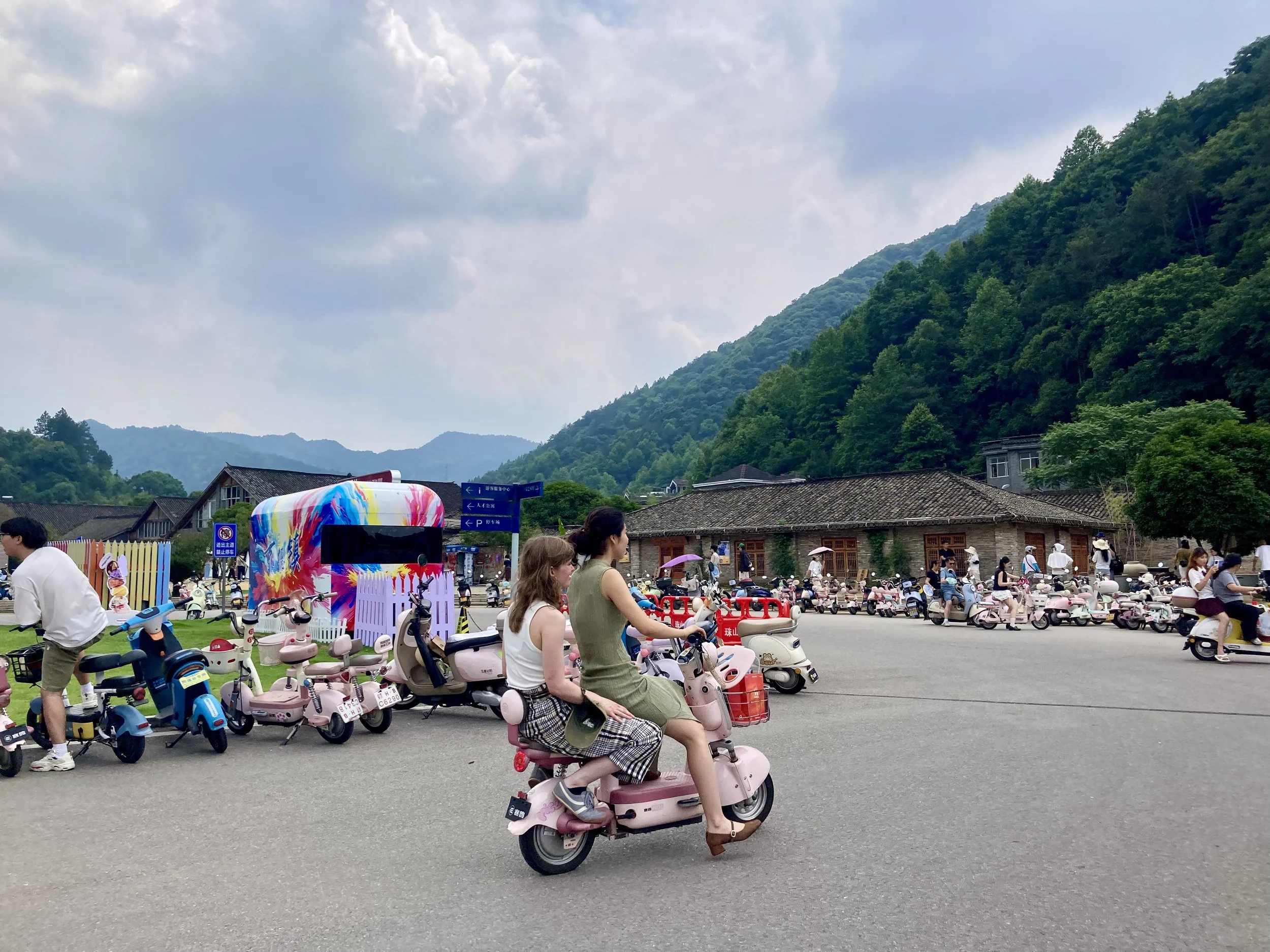
Wizzing around Sanbao on our pink electric moped, surrounded by studios, galleries and an almost overwhelming amount of ceramic work, I found myself thinking about just how deeply ceramics are embedded in the landscape and culture of the area. It wasn't simply a place where ceramics were made; ceramics seemed to be part of the environment itself.
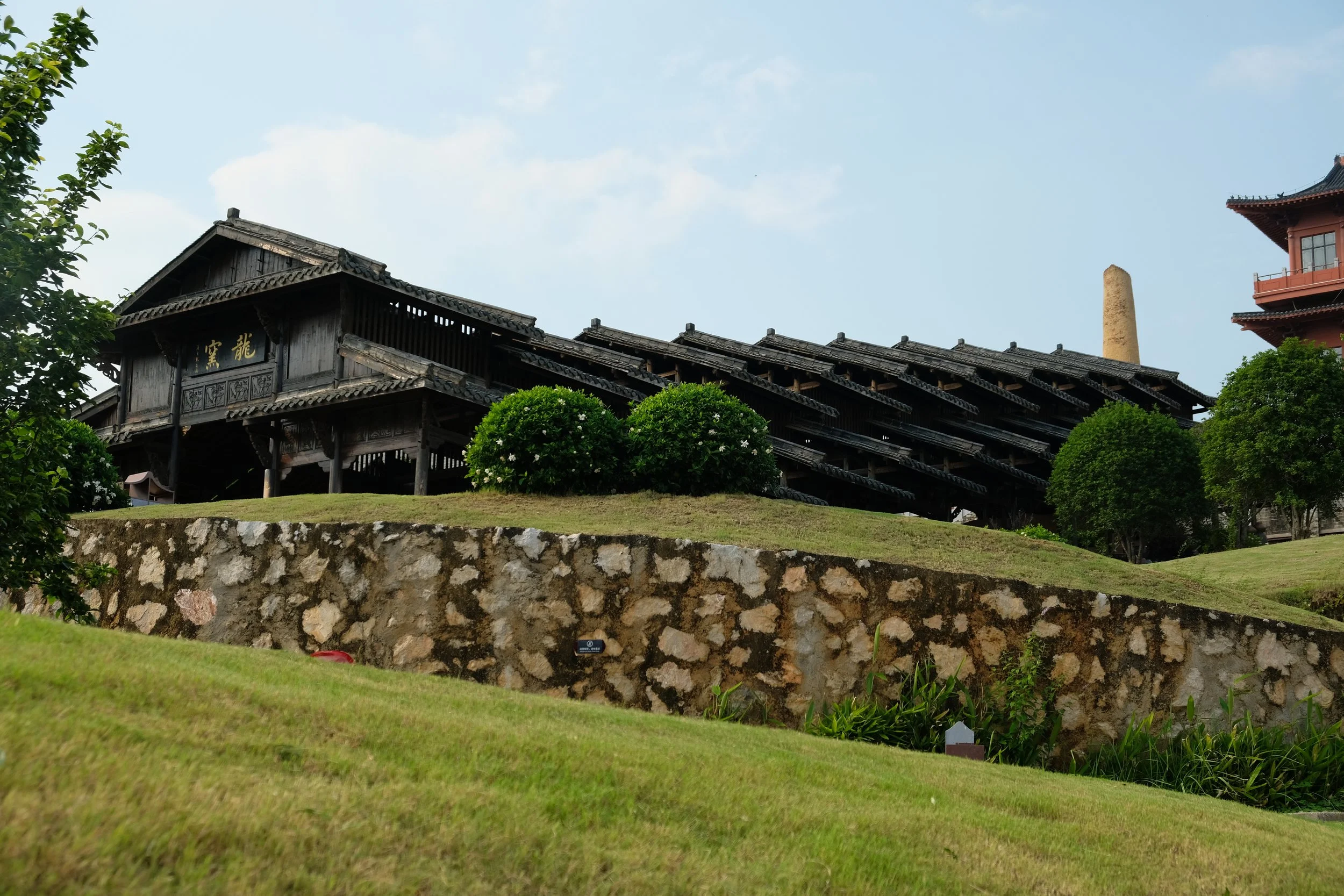
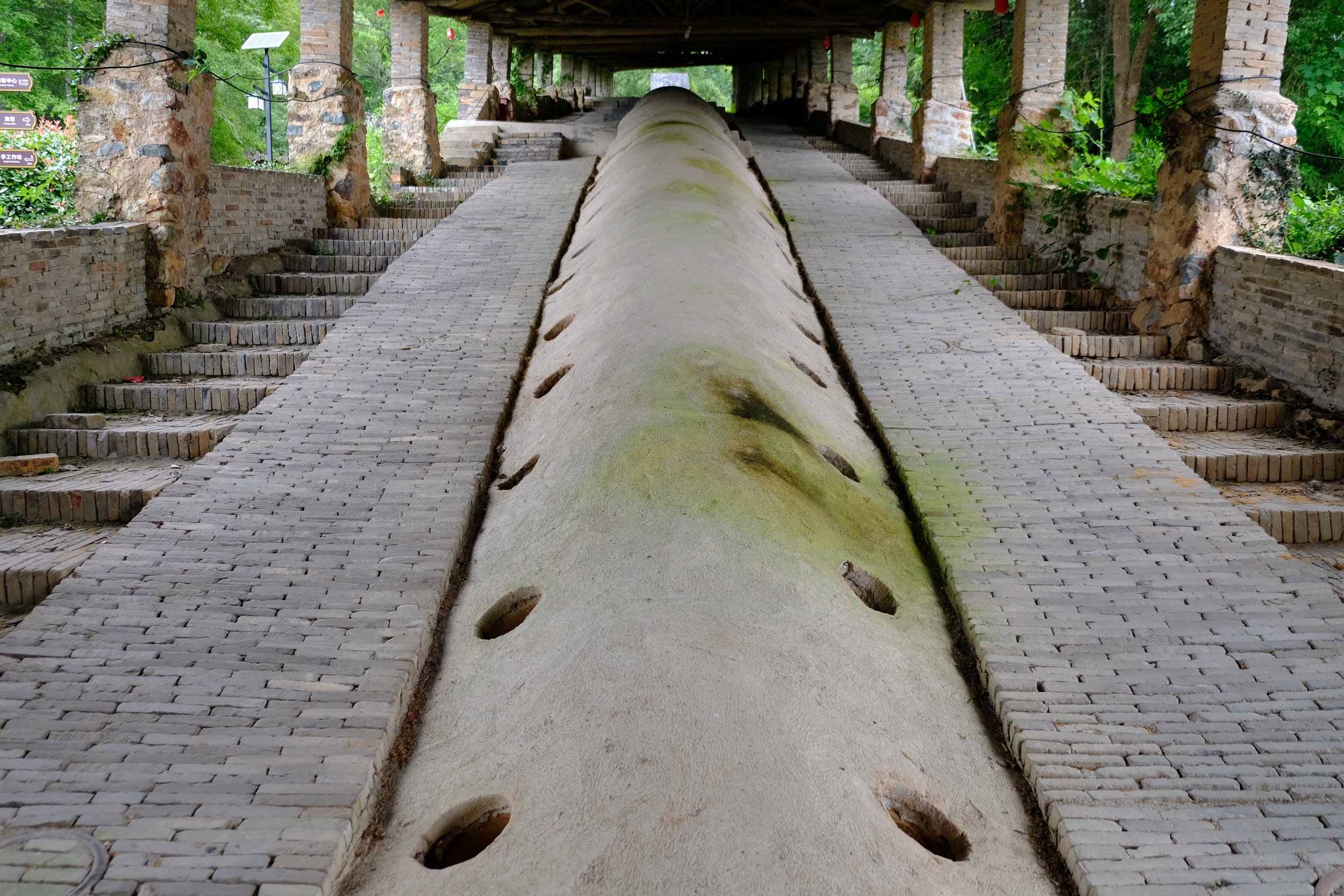
The dragon kilns were another reminder of this history. Stretching up the sides of hills around the city, they were incredibly impressive structures and a striking reminder of the scale and longevity of ceramic production here.
Being surrounded by this history became an important backdrop to the work I was developing during the residency.
Making in Jingdezhen
One of the things I wanted to explore was the overlooked side of Chinese ceramics, the small details that can sometimes be easy to miss.
I became particularly interested in handles and how something so functional could reveal so much about the maker's way of thinking and personal expression.
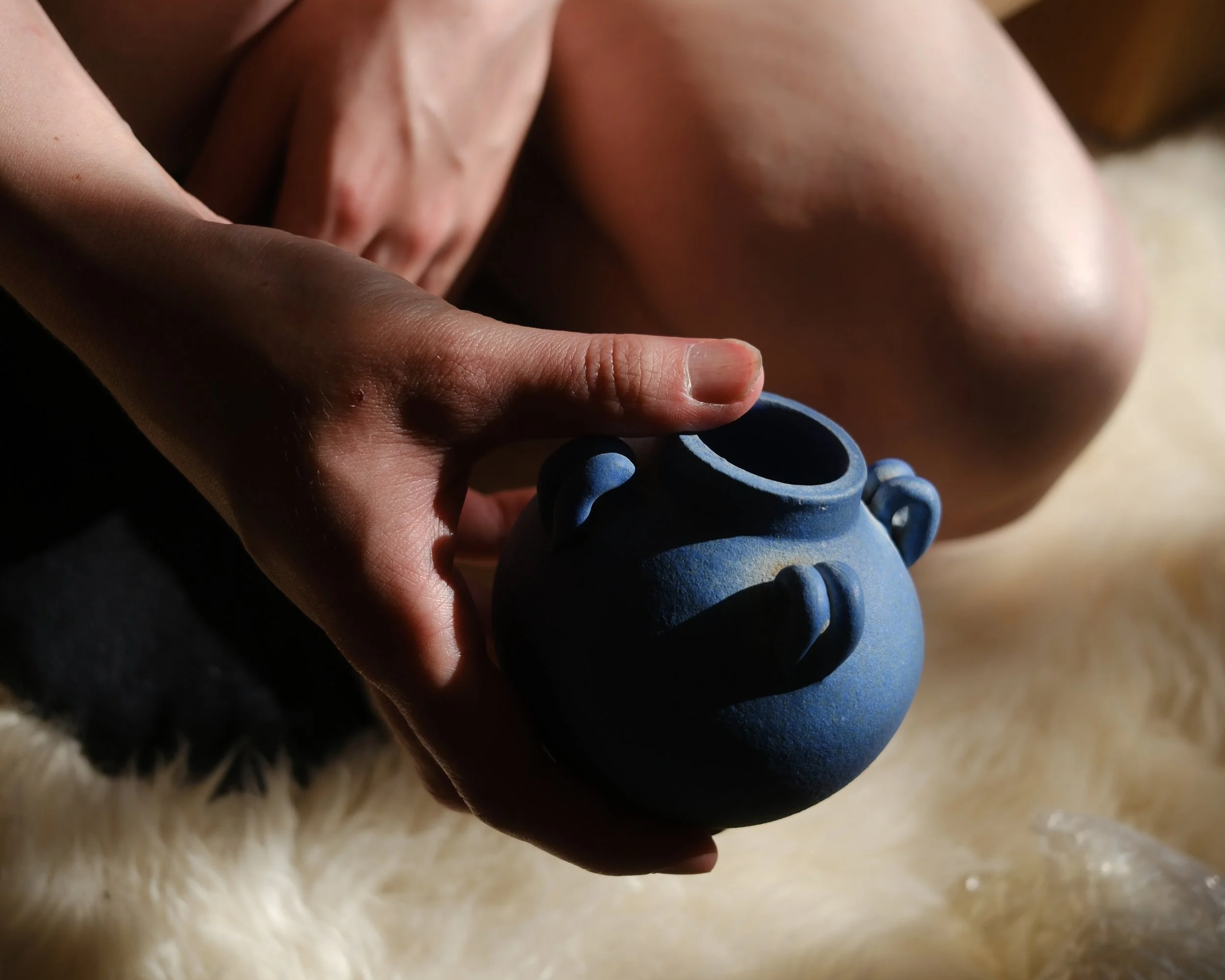
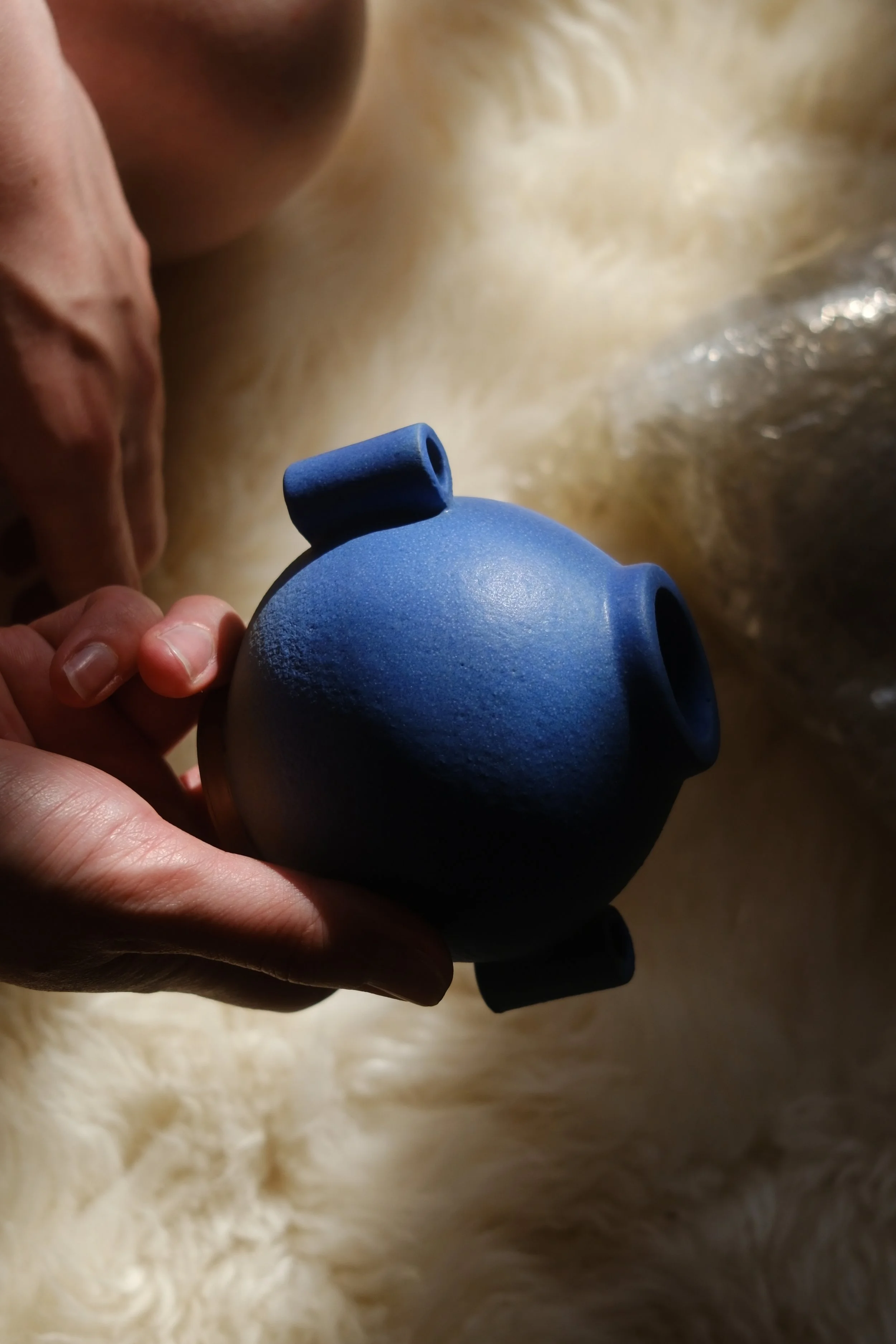
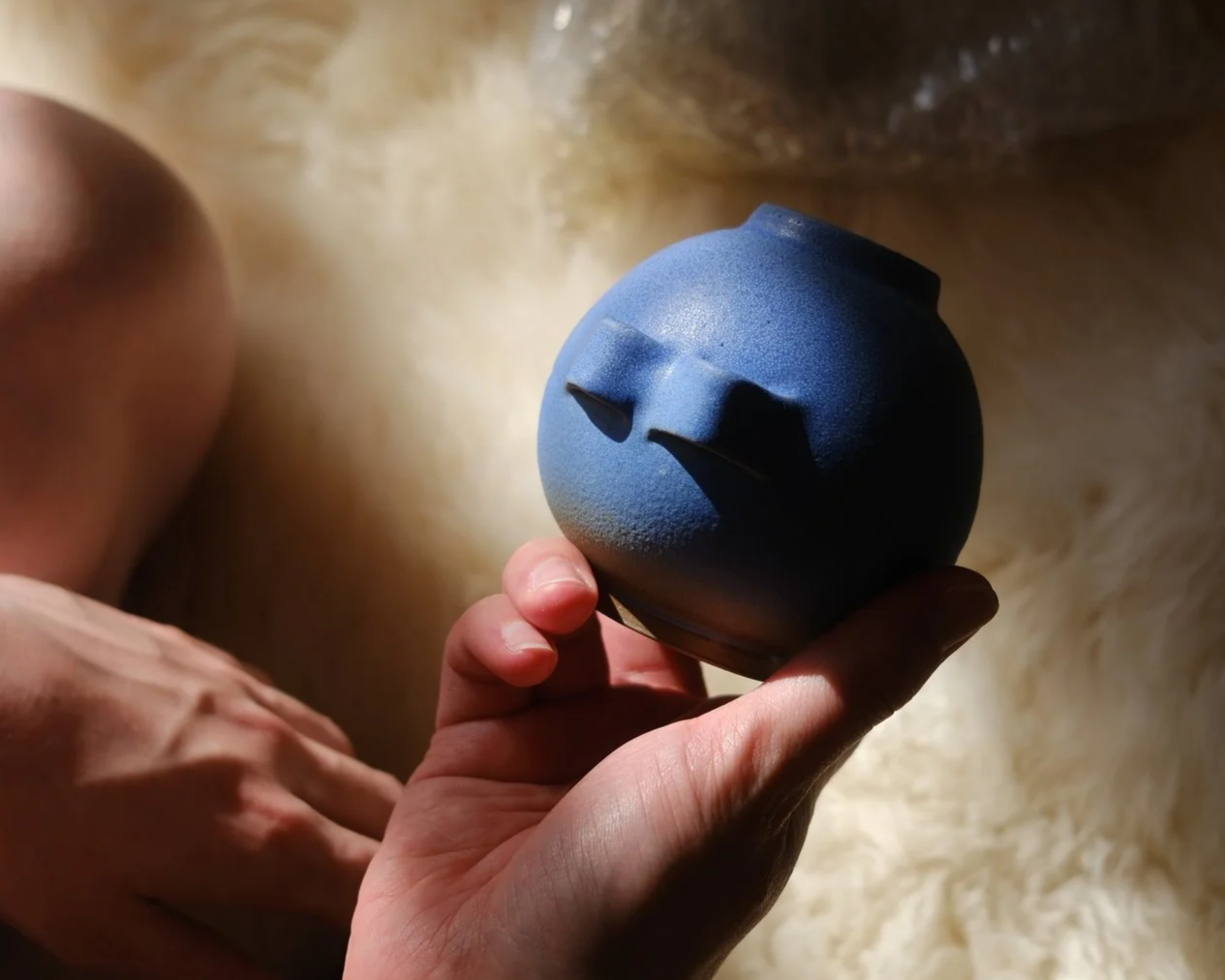
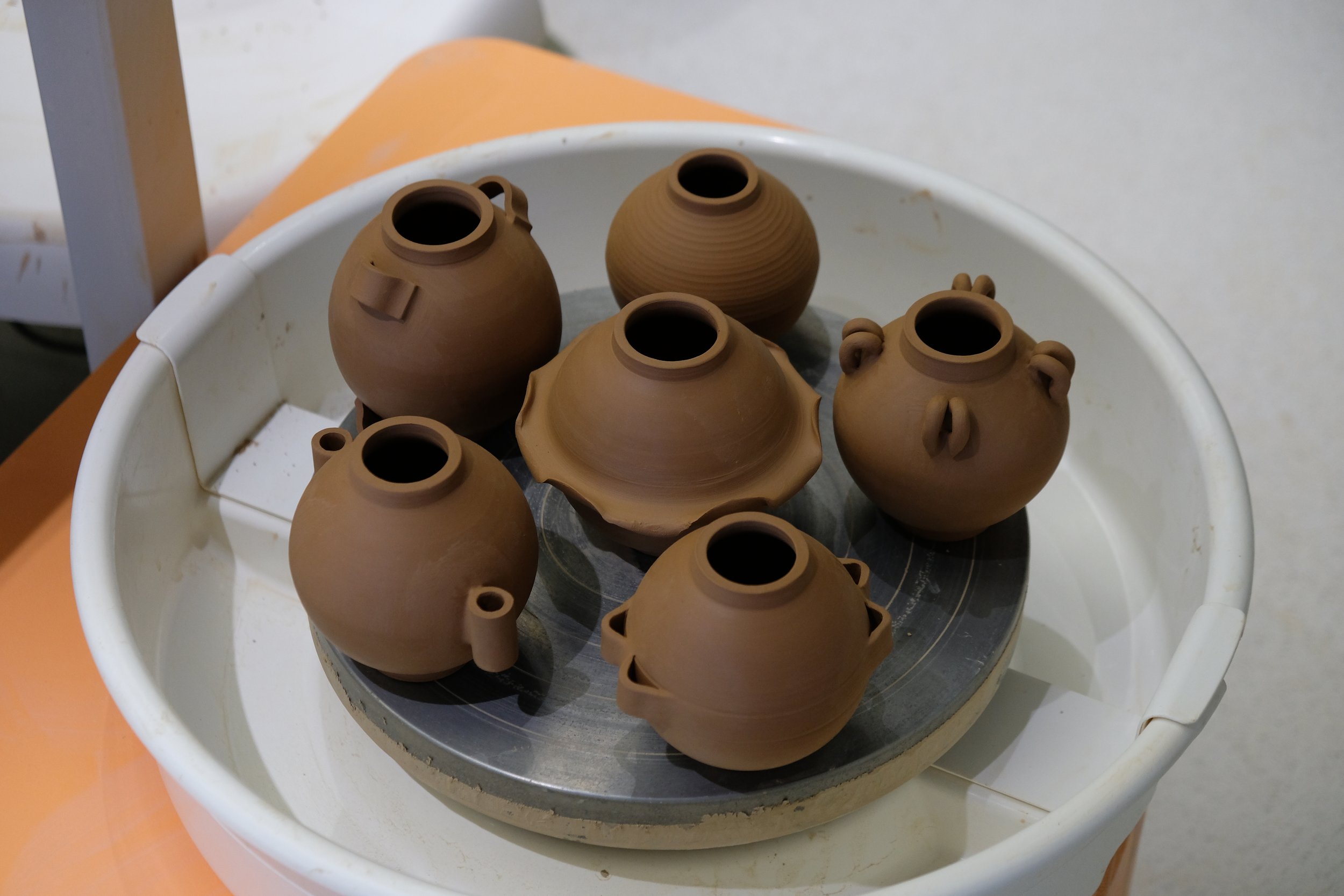
My first series focused on moon jar vessels, each with a different set of handles inspired by older Chinese ceramics I encountered during my travels.
The basic vessel remained simple, but changing the handles completely altered the personality of each pot. A small adjustment in shape, scale or position could make one feel delicate, another playful, and another much more imposing.
I paired these traditional forms with a vivid cobalt blue glaze, creating a contrast between the historical references and something much more contemporary.
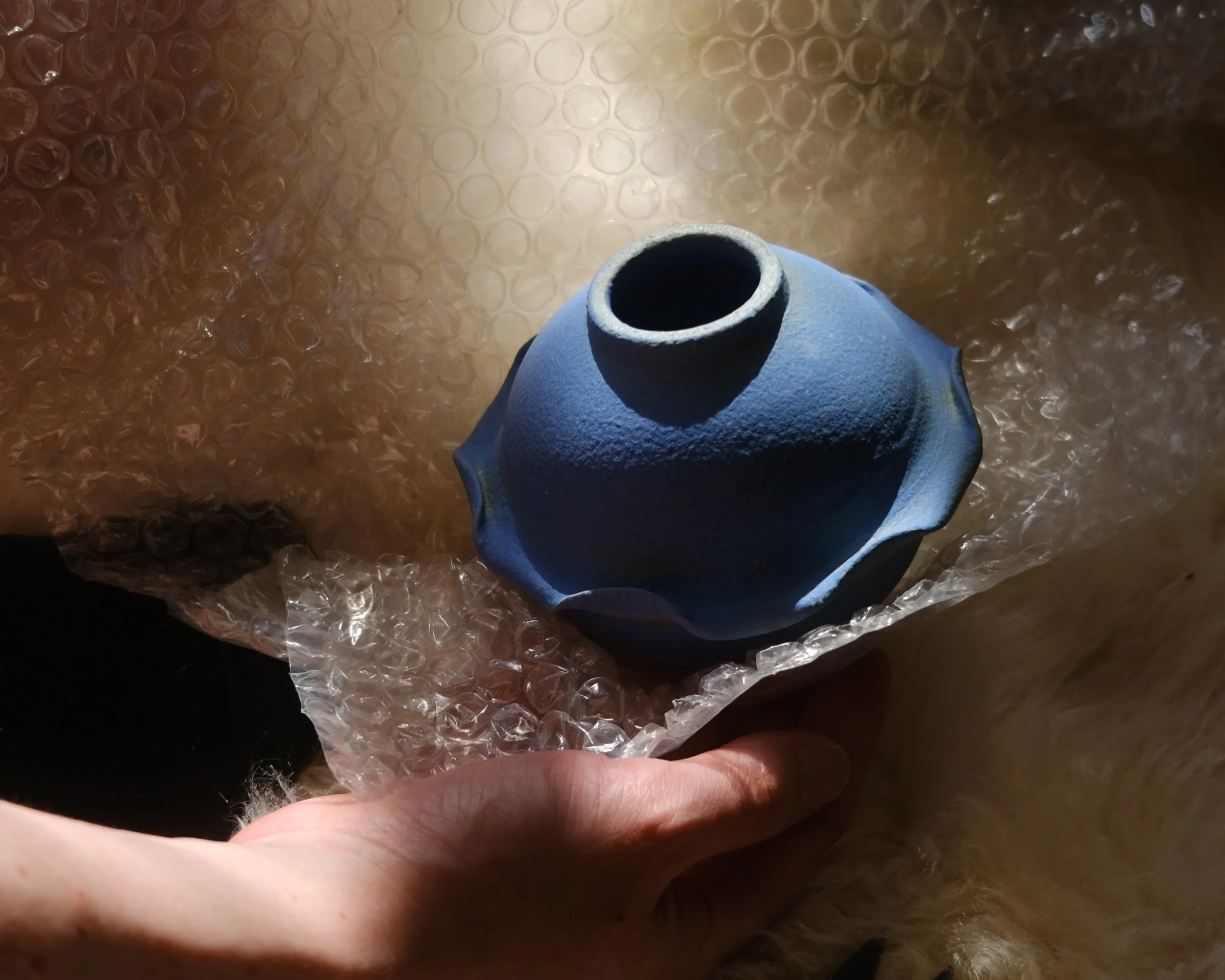
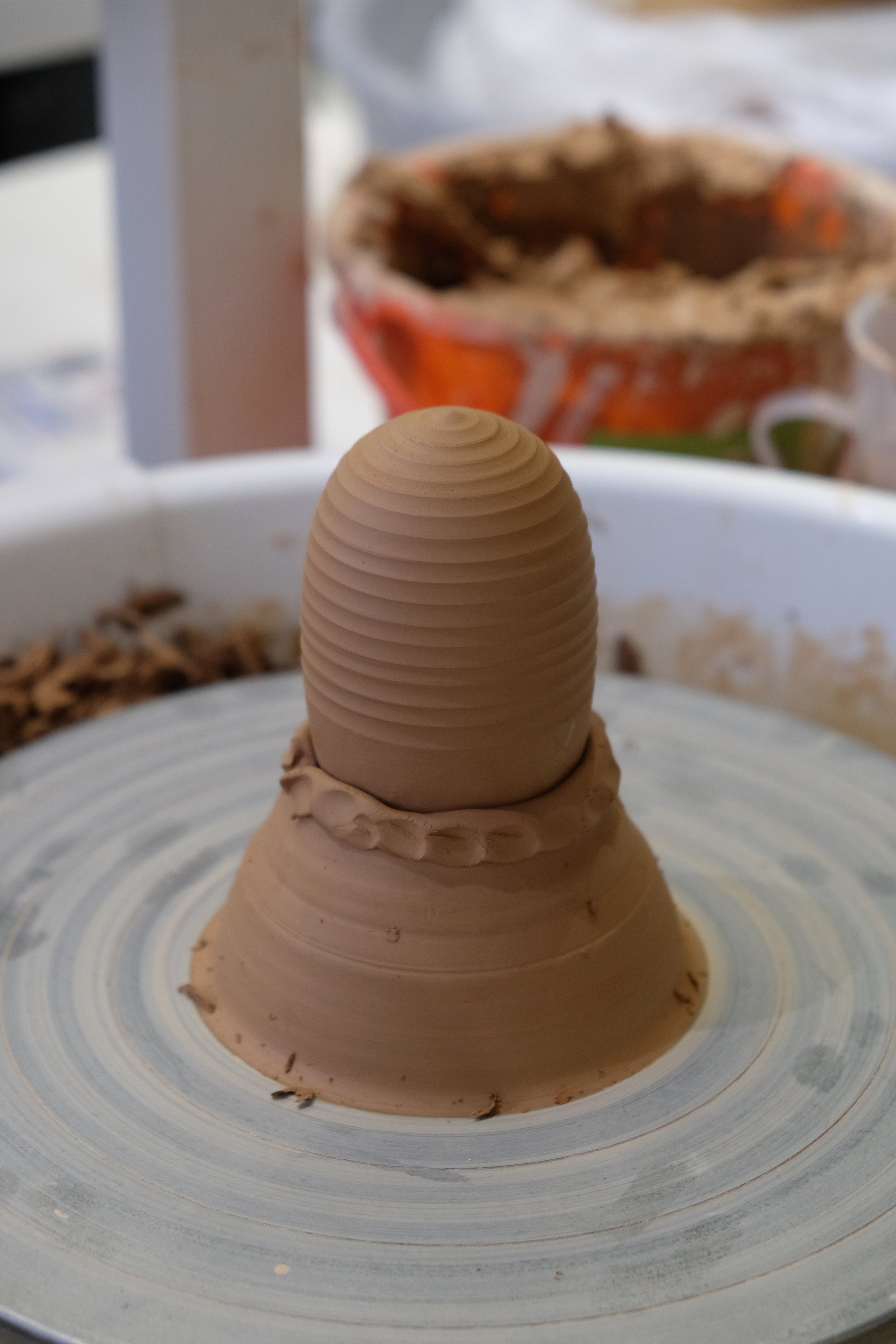
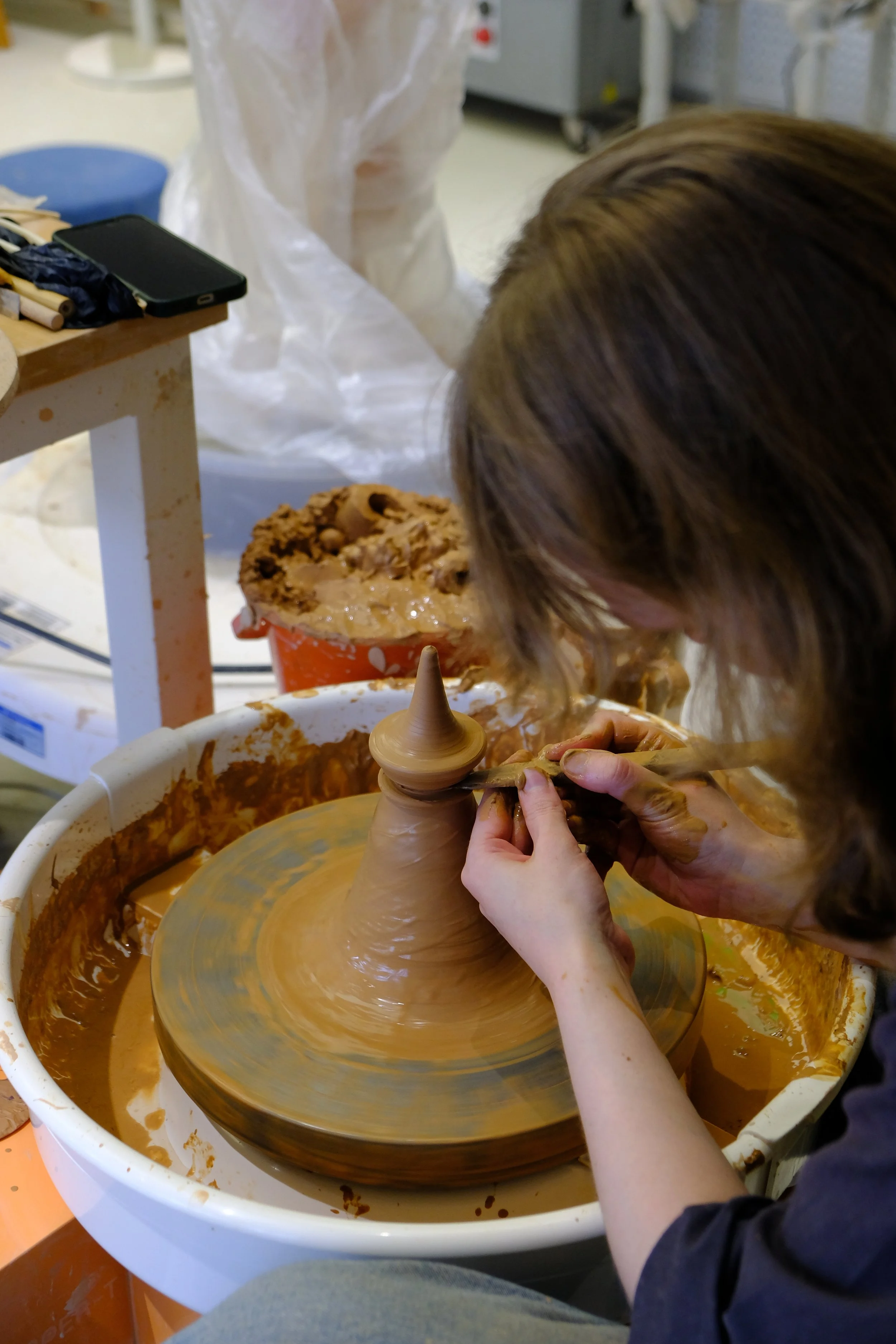
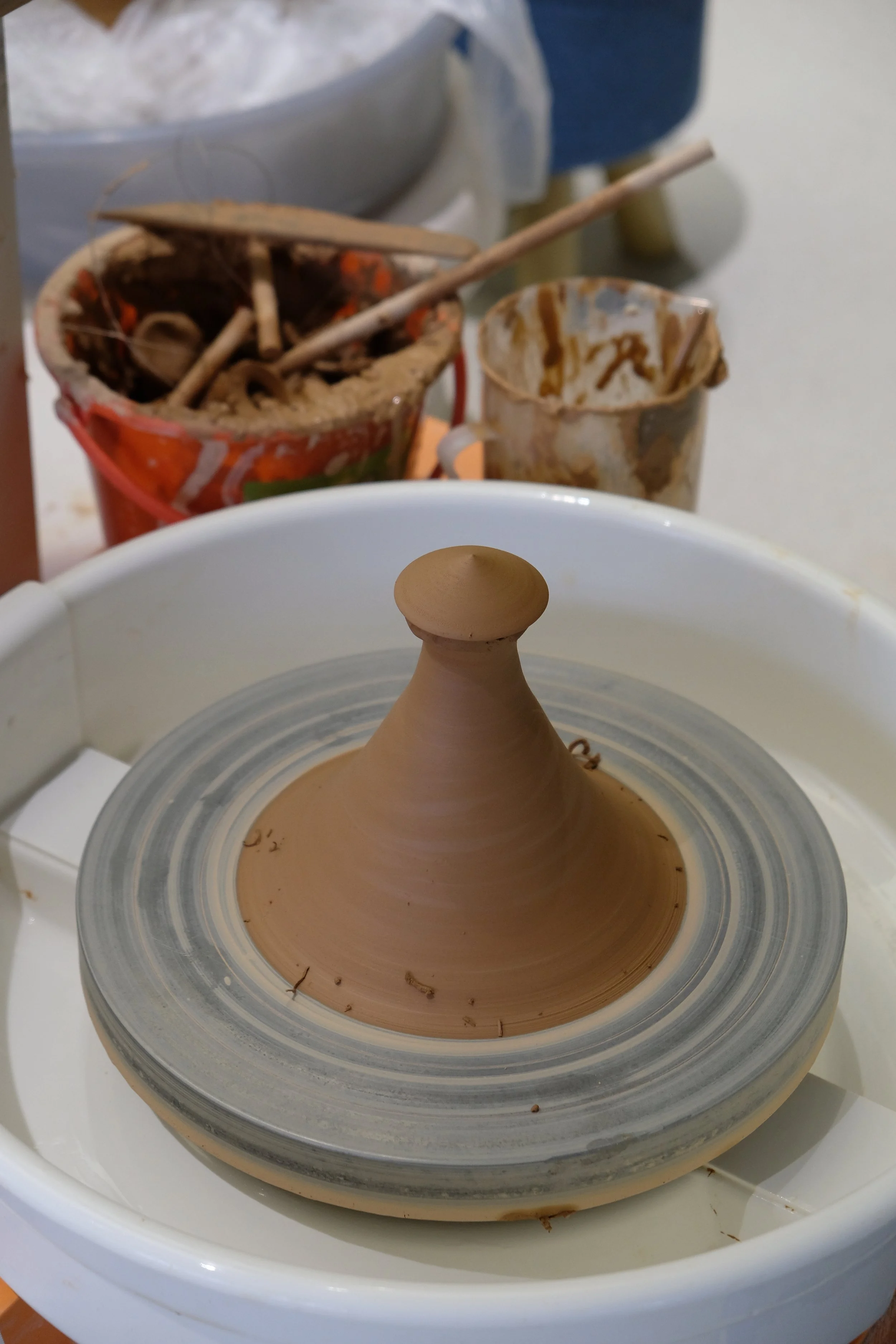
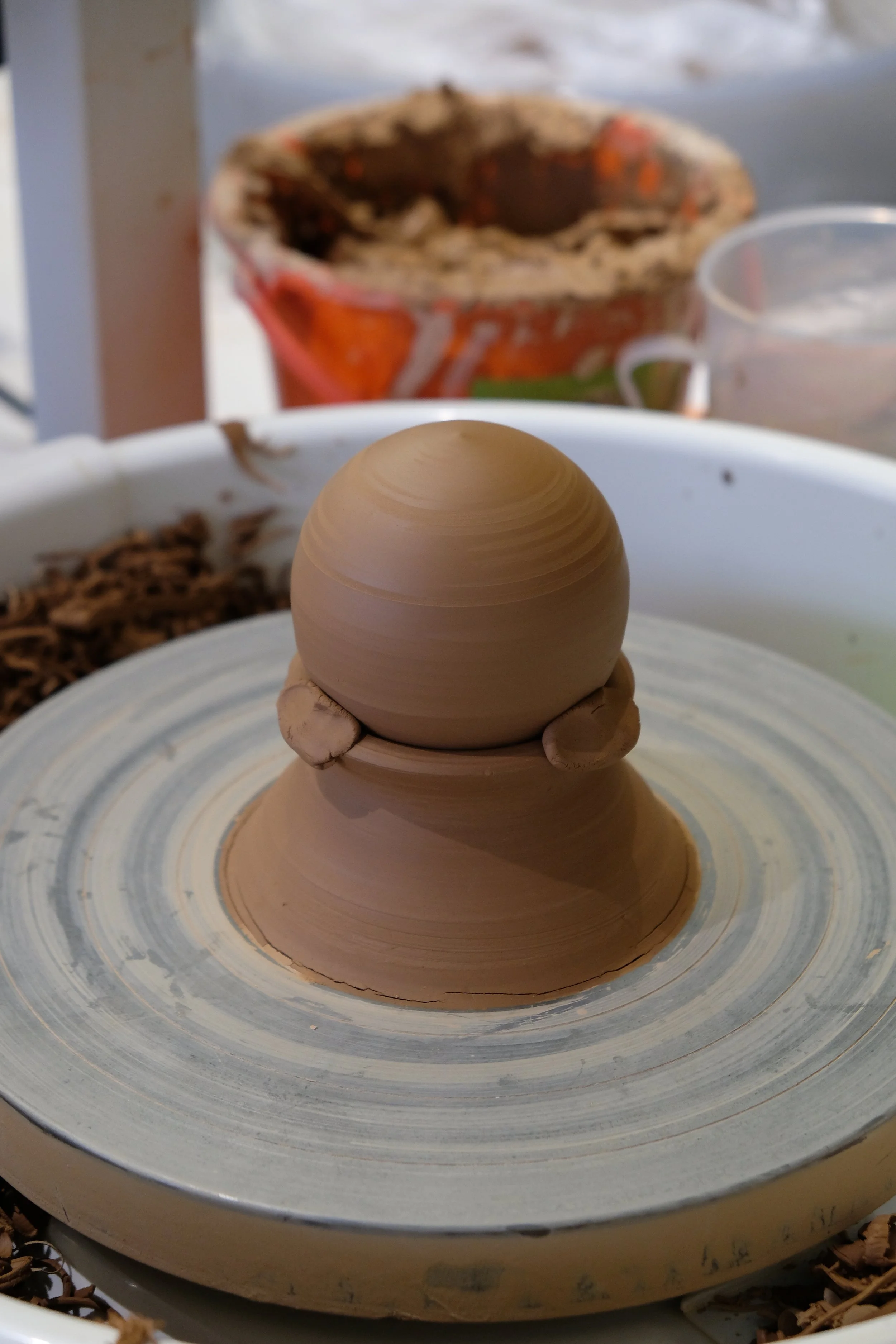
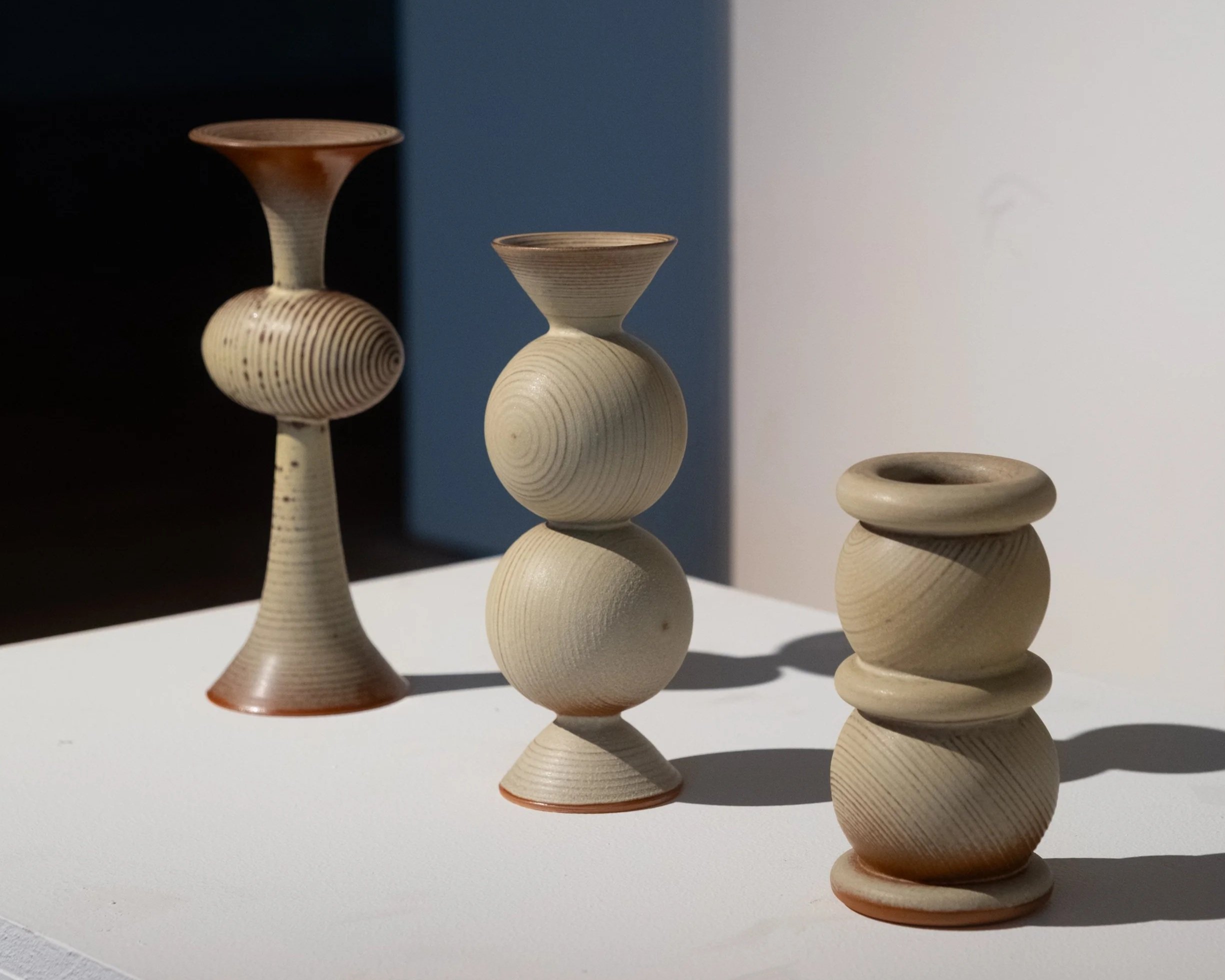
My second collection developed from a way of building that I have been exploring over the past two years: combining individually thrown forms.
Each component was thrown on the wheel, leaving intentional throwing and trimming lines visible on the surface. Rather than hiding the evidence of the making process, I wanted these marks to remain as clues for the viewer.
I then began cutting, attaching and rotating the individual pieces, arranging them so that the throwing lines contradicted one another and emphasised the different stages of their construction.
The final forms became a kind of record of the process, part thrown vessel, part assembled object.
The realities of making
Of course, making ceramics in a new country isn't entirely straightforward.
There was a slight language barrier, or maybe just a cultural differnce, particularly when it came to explaining exactly what sort of clay I was looking for. I went through several test bags before finding something that worked for me. I initially thought I was using a stoneware clay, although it may actually have been some form of porcelain.
The choice of materials in Jingdezhen was incredible, though. There were whole streets dedicated to different areas of ceramic supply: one for glazes, another for clay, another for bisque ware and others for tools and equipment.
Coming from the UK, I was amazed by how much was available and how accessible it was.
Finding the right clay did take some experimentation. Some of the clays I tried were incredibly short in plasticity, almost like trying to squash together shortcrust pastry. Not ideal when you want to throw and hand-build with the same material.
With some patience, and quite a lot of vinegar, I managed to rescue a few pieces.
Eventually I found a clay that I really liked. It started off orange but fired to a beautiful oatmeal-like colour, which became one of the main colours in my final work. I had a similar process with the glazes, going through a number of failures before finding some successful combinations, particularly the vivid blue and oatmeal colours that became central to the collection.
When things don't go to plan
Preparing for the final exhibition was intense for everyone. With such a tight timeframe, there was very little room for error, and ceramics has a habit of keeping you guessing right up until the final firing.
The exhibition pieces were no exception.
When I walked into the throwing room to see them freshly fired, I was surprised to find that they looked quite different from how I had left them. They were wilting - quite cartoonishly, bending over like tulips.
I had never had this happen to my work back home, so it took me a few moments to understand what I was seeing. But as I looked at them, I started to appreciate the unexpected character the firing had given them.
The two pieces had bent towards each other, almost as if they were two friends bowing to one another. It wasn't something I hadn’t planned, but I really liked the way the change brought the pair to life.
In the end, what could easily have been seen as a problem became one of my favourite details of the exhibition. It was a good reminder of one of the things I enjoy most about ceramics: you can make all the decisions you like, but ultimately the material gets a say too.
Making for the exhibition
The exhibition pieces had developed from my interest in traditional Chinese forms.
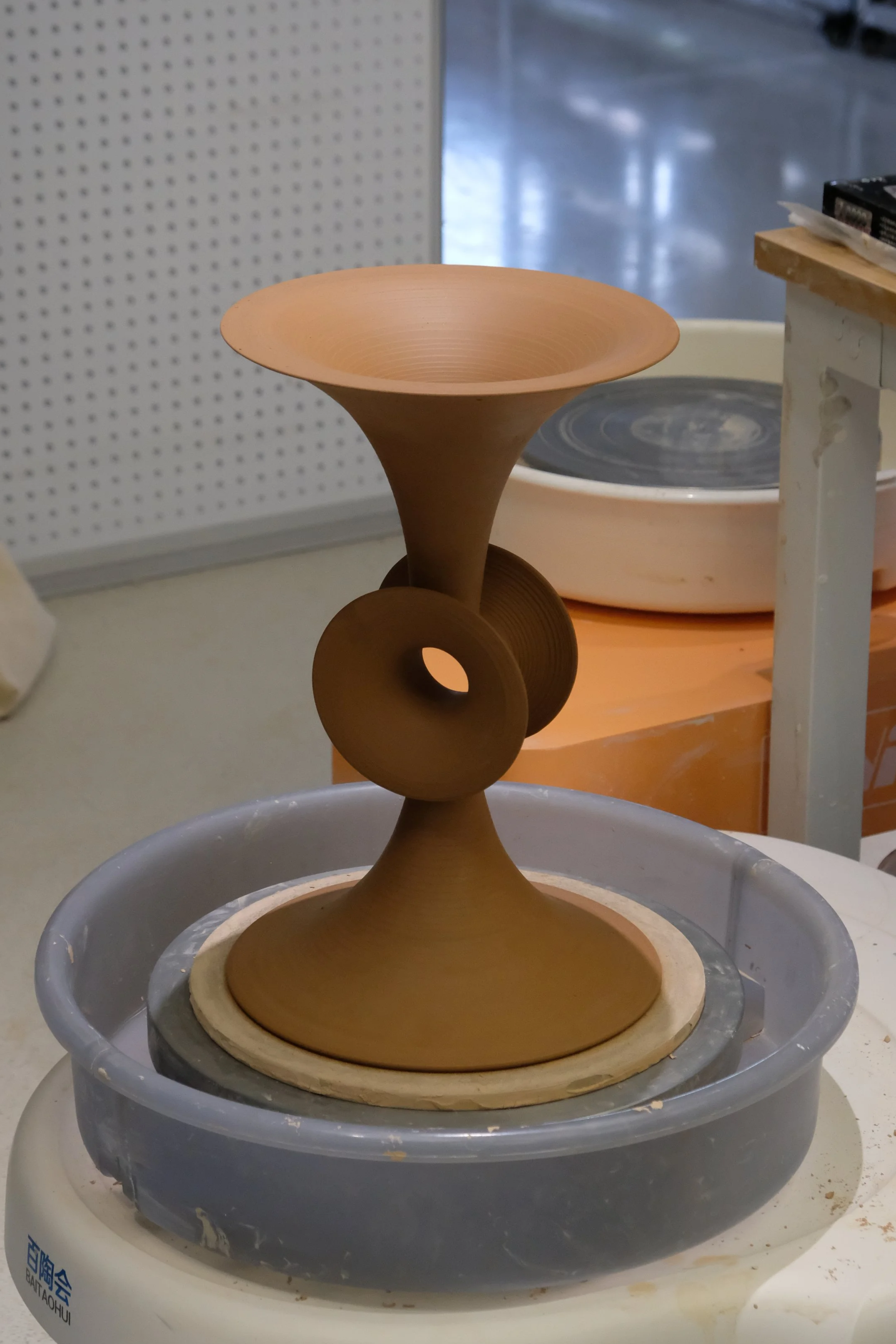
I was particularly drawn to traditional Chinese drinking cups, historically made from metal and often constructed around a double-ended trumpet shape with a decorative element in the middle.
I wanted to take this familiar form and exaggerate its presence.
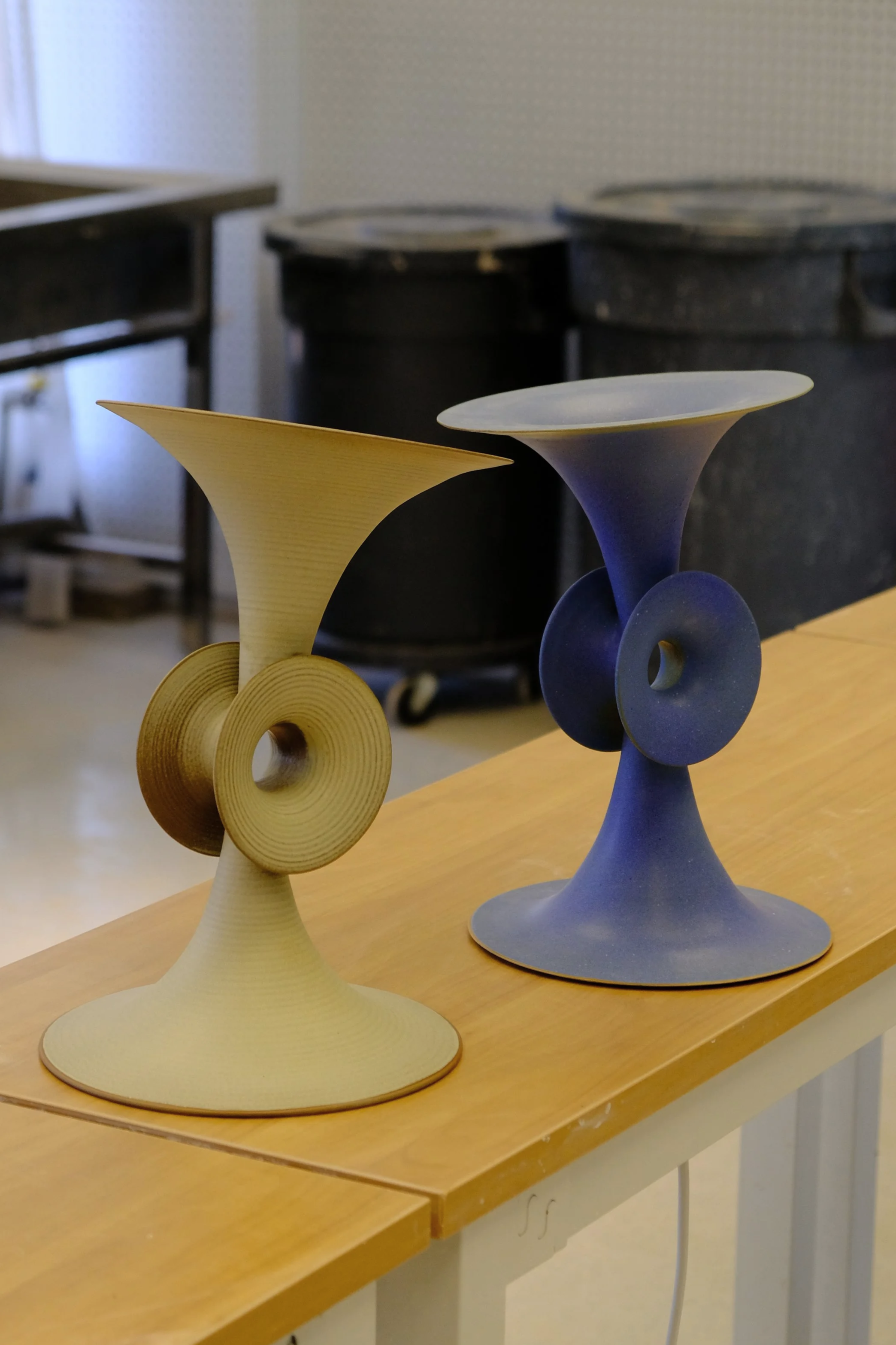
Working on a much larger scale, I created a vase using two exaggerated trumpet-like forms with a fluted bobbin in the centre. The construction creates a void through the middle of the vessel, allowing the viewer to see straight through it.
The scale gives the piece a sense of presence, while the open centre makes it feel surprisingly light and playful. There is also something slightly precarious about the form, as though the two halves might tip away from one another at any moment.
I made a pair: one with a ridged surface covered in an oatmeal glaze and another in vivid cobalt blue on a smooth surface, allowing the two to contrast boldly with one another.
A playful ending
After weeks of intense making, experimenting and problem-solving, I wanted to finish the residency with something a little more playful.
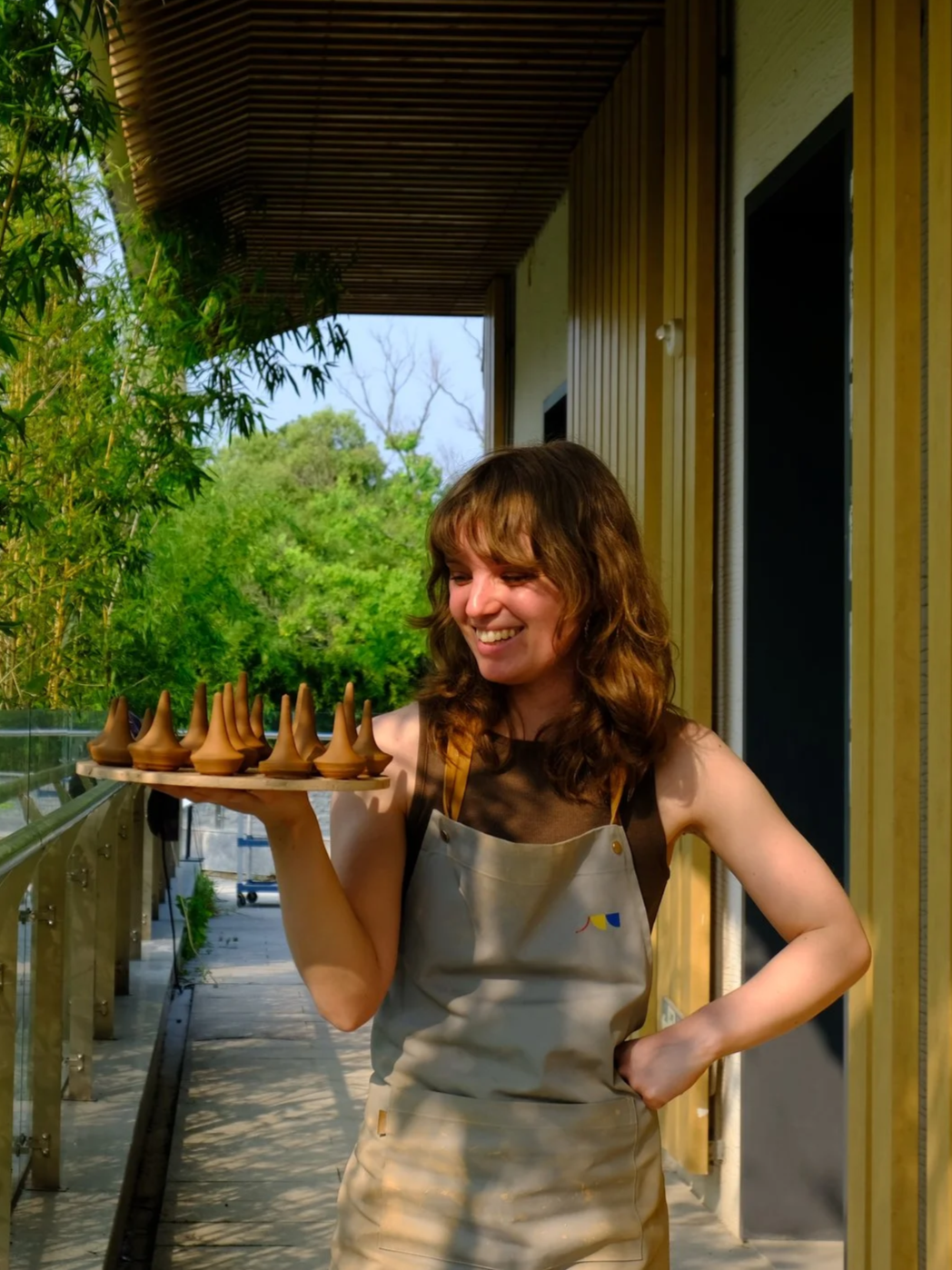
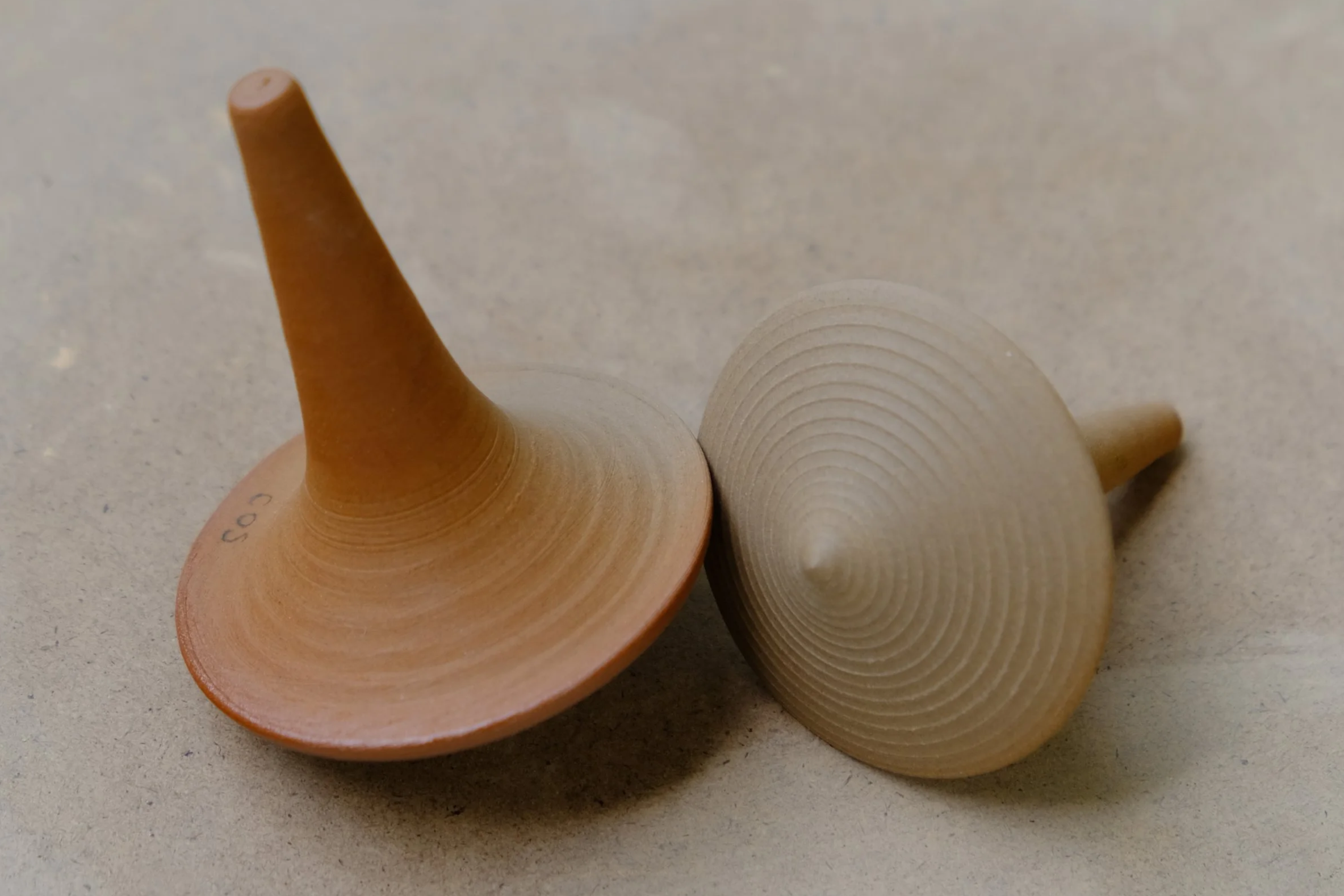
So I made a series of spinning tops, thrown “off the hump”, as small gifts for the artists, professors and other guests visiting the residency forum.
They were a simple project compared with the larger exhibition pieces, but they felt like an appropriate way to finish. Making something small and playful to give to the people I had met during the residency seemed like a fitting way to mark the experience and share a little piece of my time in Jingdezhen with them.
What I'll take home
One of the biggest benefits of the residency was the concentrated period of time in which we had to work.
A month isn't long, particularly when you're making ceramics, but the pressure of the timeframe forced me to make decisions quickly. Some were bad, but most were good, and many resulted in work that I don't think I would have made if I had been working at home with more time to deliberate.
It reminded me how much I benefit from being immersed in unfamiliar surroundings and surrounded by artists with completely different experiences and approaches to making.
Sharing studios, conversations and ideas with the other residents was just as valuable as the work itself.
More than anything, the residency reaffirmed for me that ceramics really is a universal language. It is one of the earliest and most humble forms of making, yet it has travelled across cultures and generations, constantly changing as it goes.
Ceramic traditions mingle, migrate and reappear in unexpected ways.
To spend time in Jingdezhen, a place with such an extraordinary ceramic history, and to contribute my own small part to that ongoing conversation was a real honour.
I left with a new body of work, a much longer list of things I want to explore, and a suitcase considerably heavier than when I arrived. Getting a large ceramic vase through an airport as hand luggage was perhaps the final challenge of the residency.